
Opening
One overnight bus, a little independence, and a two-day adventure into the Peruvian Andes. Sometimes the best part of travelling with friends is knowing when to go your own way. After spending time together in Cusco and experiencing the incredible Inca history around Machu Picchu, I decided it was time for a little detour.
Just me, my backpack, an overnight bus, and a completely new city. The destination? Arequipa, Peru. And what started as a relatively simple solo trip turned into a few days filled with incredible landscapes, unexpected experiences, local food and some of the biggest birds I've ever seen.
But first, I had to get there.
Cusco to Arequipa · Sometimes you need your own adventure
One thing I've learned while travelling is that being together 24/7 isn't always necessary. Don't get me wrong. I love travelling with my friends. We have an amazing time together, and sharing these experiences makes the journey even better. But sometimes I just need a little space.
Not because something is wrong, but because I genuinely enjoy exploring places on my own. And sometimes I simply want to experience something that the others aren't particularly interested in. Before leaving the Netherlands, we actually had a conversation about exactly this. We agreed that although we were travelling together, everyone should have the freedom to occasionally go their own way.
No hard feelings, no unnecessary discussions. Just respecting that everybody experiences travelling differently. So I decided to put that agreement into practice. While the others continued with their own plans, I booked an overnight bus from Cusco to Arequipa. A solo detour, with one big adventure waiting at the other end: Colca Canyon.
I wrote more about that feeling in The Freedom to Take a Detour.
The overnight bus · A seat worth booking early
Now, if there's one thing I can recommend when travelling through Peru, it's giving the long-distance buses a chance. Seriously. I booked my ticket with Cruz del Sur, one of Peru's well-known intercity bus companies. And I'm not talking about your average bus with cramped seats and absolutely no legroom.
I managed to book seat number one in the premium class. And what a seat that was. A huge, comfortable reclining seat that felt almost flat. The exact recline depends on the service you book. It honestly felt more like a business-class seat on an airplane than a regular bus.
I could stretch out, relax and actually get some decent sleep. Eight hours on a bus? No problem whatsoever. I'd genuinely rather spend eight hours in a bus like this than three hours dealing with airports and flying. And yes, I'm serious. Of course, there's one important thing I would do differently if booking again.
Actually, it's more of a warning for anyone planning a similar journey: Book your ticket early. The best seats disappear quickly, especially on popular overnight routes. I was lucky enough to get exactly the seat I wanted, but I wouldn't recommend leaving it until the last minute.
Travelling overnight also means saving money on accommodation while getting from one destination to another. Two problems solved with one ticket. Not bad for backpacking, right?
Arequipa · A sunny welcome to the White City
At around 7 AM on Tuesday morning, I finally arrived in Arequipa. And the first thing I noticed? The weather. After spending time in Cusco, where the evenings and nights could get seriously cold, arriving somewhere with temperatures around 25°C felt fantastic. A little sunshine, comfortable temperatures, and a completely different atmosphere.
Exactly what I needed. Arequipa is often called Peru's White City. Its UNESCO-listed historic centre is built in volcanic sillar stone. And there's a pretty interesting reason behind that name. Many of its historic buildings were constructed using sillar, a light-coloured volcanic stone that gives the city its distinctive appearance.
The historic centre is so special that it was recognised as a UNESCO World Heritage Site in 2000.
Read the fact: A City Built From Volcanoes?.
But before exploring any of that, I first needed to drop off my backpack. I took a taxi to Viajero Arequipa Hostel. Viajero is a hostel brand I'd already become familiar with during my travels through Peru, alongside other popular backpacker hostels such as Wild Rover.
Generally, you get relatively affordable accommodation, decent facilities and an atmosphere where it's easy to enjoy yourself without spending too much. I arrived too early to check in, but fortunately that wasn't a problem. I left my luggage, ordered breakfast at the hostel restaurant and opened my laptop.
Because as much as I would love to spend every single minute of this trip exploring, there's still work to be done. My website doesn't exactly update itself. Well... not completely, anyway. 😂 After a few hours of working, it was finally time to discover Arequipa.
Exploring Arequipa · Volcanoes, history and local life
I had deliberately planned a relatively relaxed day. The following morning I would be leaving early for my two-day Colca Canyon adventure, so I didn't want to exhaust myself before it had even started. My first stop was Plaza de Armas. And honestly, what a beautiful square.
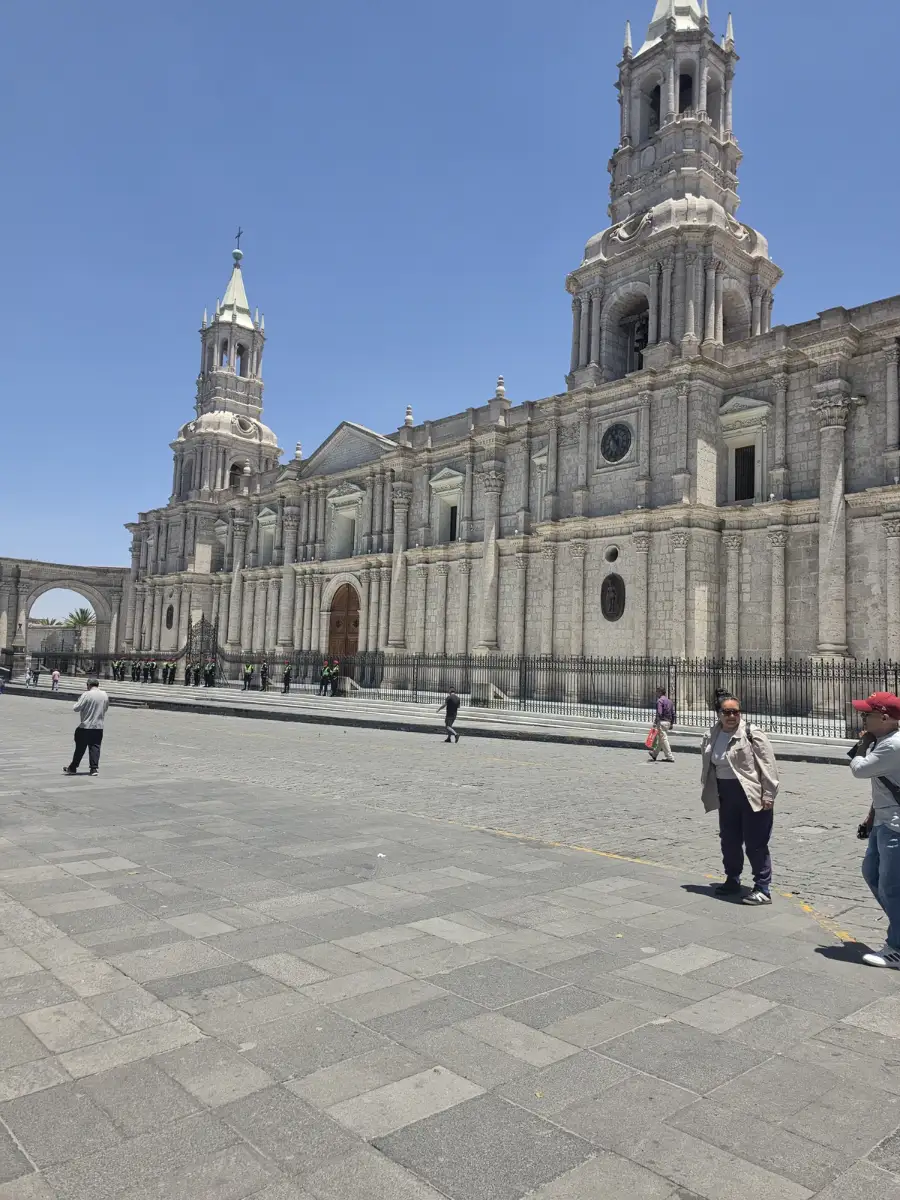
Surrounded by historic buildings, arches and the impressive Arequipa Cathedral, it's exactly the kind of place where you can sit down with a drink and watch city life unfold. Interestingly enough, there was also a demonstration taking place while I was there. Groups of local people had gathered in the centre, making their voices heard.
I wasn't entirely sure what the demonstration was about, but it was interesting to see another side of everyday life in the city. After spending some time around the square, I continued walking towards one of Arequipa's most famous viewpoints. The Mirador de Yanahuara. And this is definitely a place worth visiting.
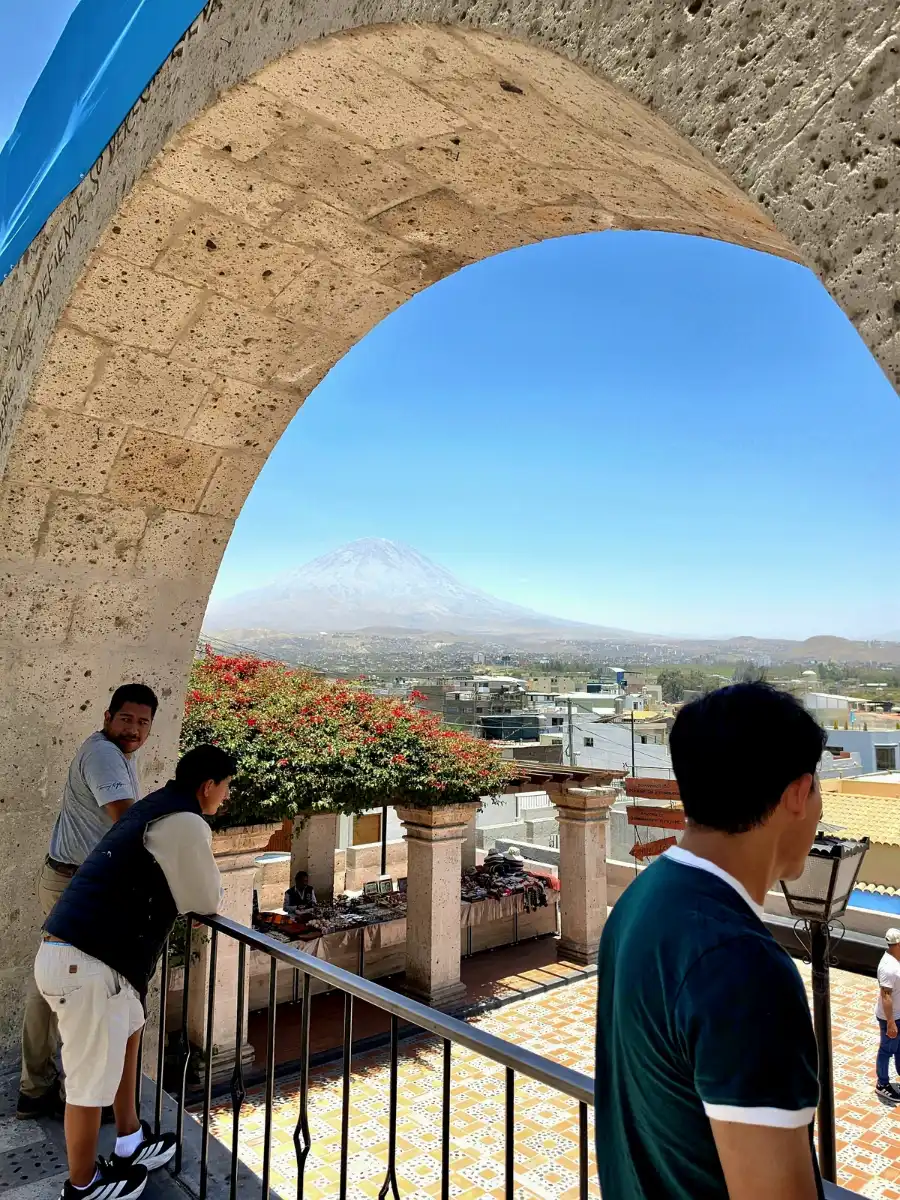
From here, you get an incredible view over the city, with the mighty Misti volcano rising in the distance. The viewpoint itself has beautiful arches made from volcanic stone, with inscriptions carved into them. A perfect place to take some photographs. And yes, naturally, I took more than a few.
From Yanahuara, I continued walking through the city, passing Puente Grau before heading towards another interesting stop. Mundo Alpaca. Now, by this point in Peru, I'd already seen quite a few alpacas and llamas. But there's actually a lot more to these animals than just looking cute in photographs.
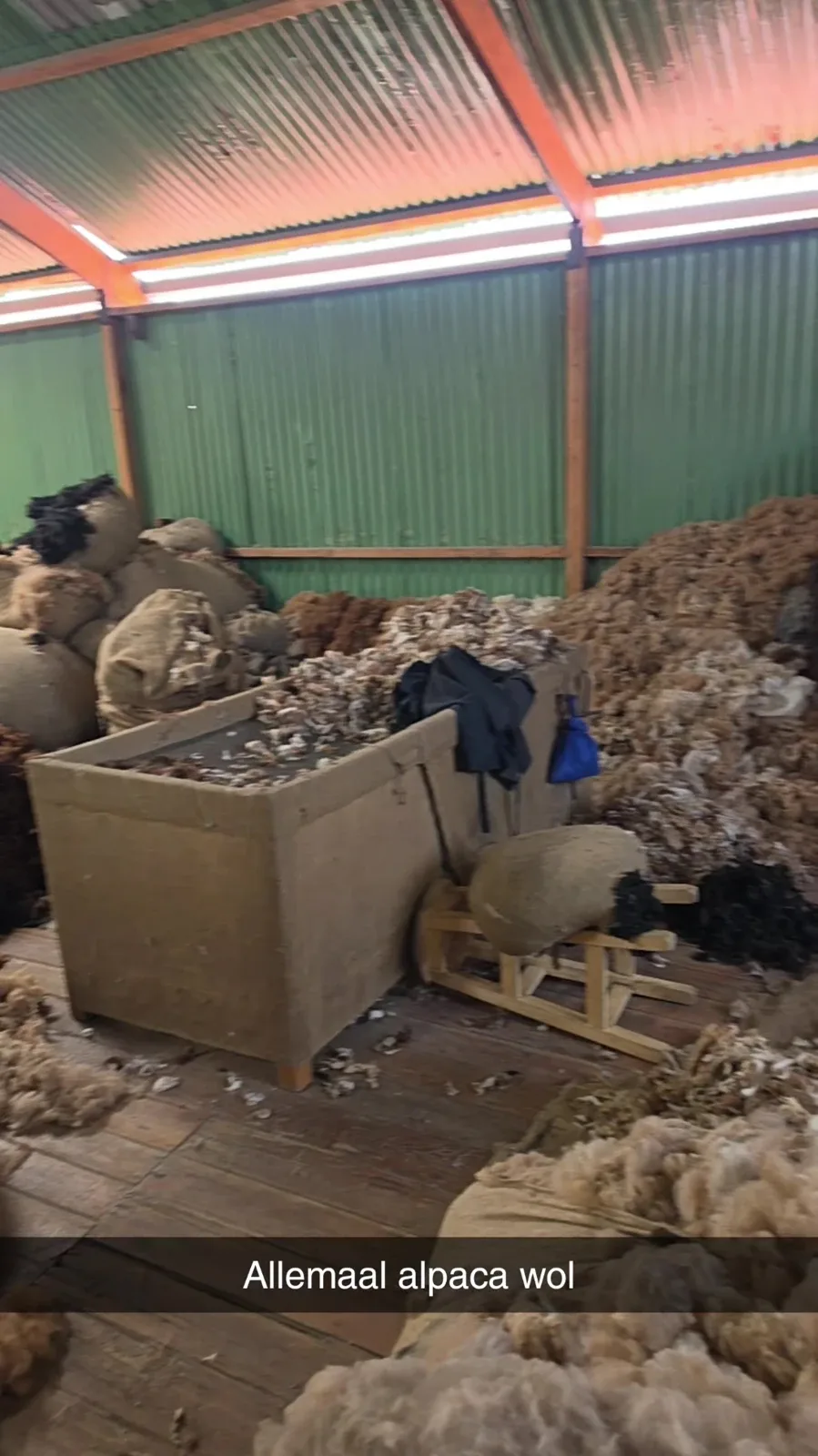
Mundo Alpaca is an interesting cultural centre where you can learn about alpaca fibre, traditional weaving techniques and the history of textile production in the Andes. You can see alpacas, discover how their fibre is prepared and learn about the work involved in producing those beautiful alpaca sweaters you see everywhere in Peru.
And here's something that surprised me: The visit itself is free. For a budget traveller like me, that's always a welcome bonus. It's a nice stop if you're interested in local culture, traditional clothing or simply want to understand what you're actually buying when someone offers you an "authentic baby alpaca sweater."
Mercado San Camilo · Time for some proper local food
After all that walking, I was getting hungry. And rather than going to another tourist-oriented restaurant, I wanted something more local. So I headed to Mercado San Camilo. One of Arequipa's traditional markets. This was much more my kind of place. Fresh fruit, vegetables, local products, food stalls and people going about their daily routines.
Not everything is designed around tourists, and that's exactly why I enjoy visiting markets like this. You get a glimpse of how a city actually works. And, most importantly, you can find some delicious local food. After eating, I made my way back towards the hostel, walking along Calle Mercaderes and passing Plaza de Armas once again.
Nothing particularly crazy. Just a relaxed afternoon discovering a new city at my own pace. Which, honestly, was exactly what I wanted from this solo detour.
Alaseña Steakhouse · A restaurant where words aren't necessary
Later that afternoon, I spent some more time working on my laptop before heading out for dinner. And this is where one of the most unexpected experiences of my time in Arequipa happened. I was walking through the city looking for somewhere to eat when I came across a steakhouse.
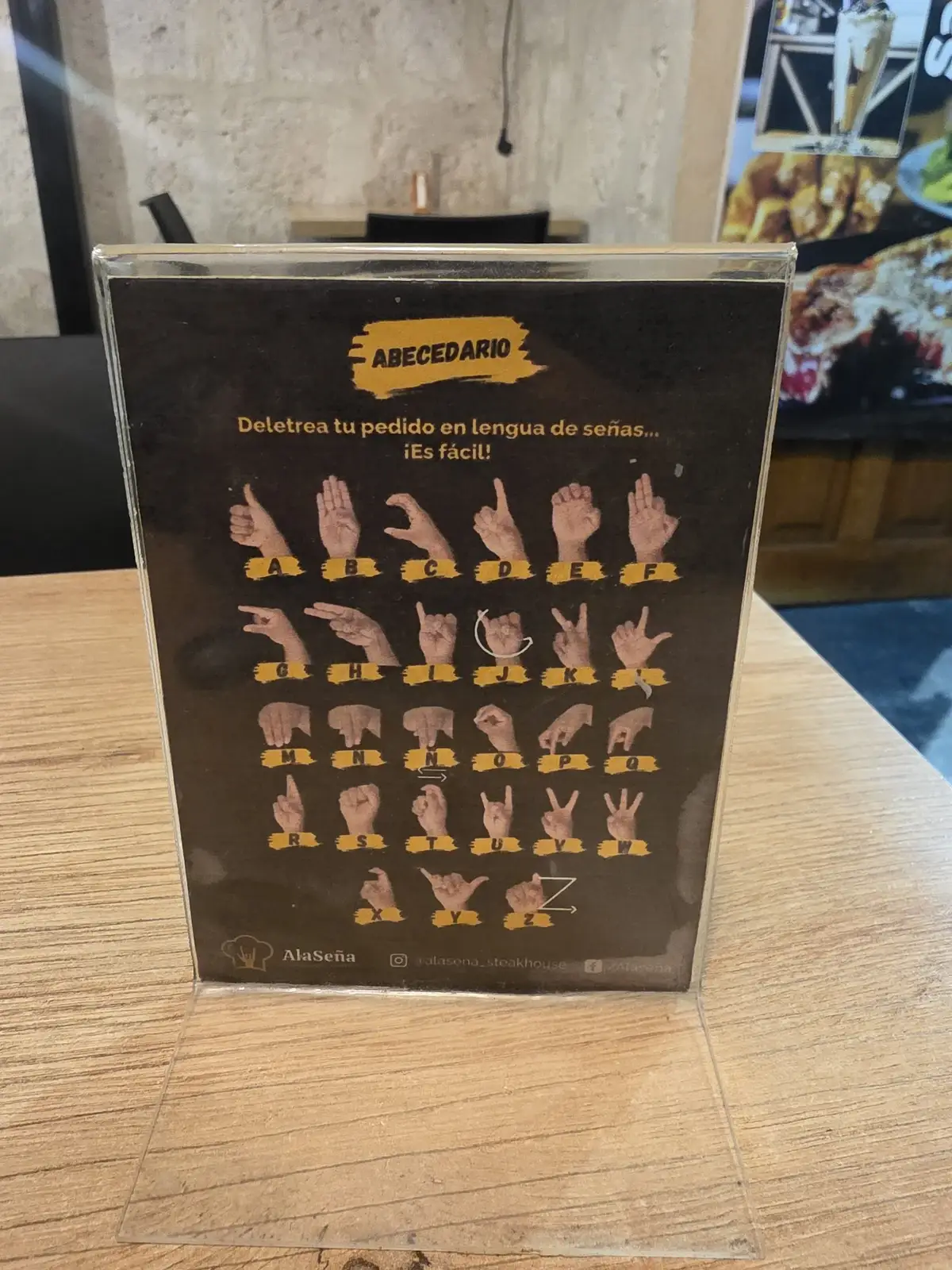
It looked interesting, so I decided to give it a try. The restaurant was called Alaseña Steakhouse. But this wasn't just an ordinary steakhouse. Something was different. When I tried to communicate with the staff, I quickly realised that speaking wasn't going to work in the way I was used to.
And for a moment, I genuinely had no idea what to do. How exactly was I supposed to order my food? What I hadn't realised before entering was that Alaseña has a very special concept. The restaurant promotes Peruvian Sign Language and creates employment opportunities for deaf people. Universidad Continental explains the founders’ story.
Even the menu and ordering experience are designed to encourage guests to communicate using signs. So there I was, trying to figure out how to order a burger without relying on spoken words. Fortunately, with a little patience and the help of the restaurant's system, it all worked out.
And I'm glad it did. Because I ended up having a fantastic burger and a well-deserved beer. But what made this dinner memorable wasn't just the food. It was the experience. It made me realise how many things we take for granted when it comes to everyday communication.
Ordering food is something most of us barely think about. Until suddenly you have to approach it in a completely different way. An unexpected experience, but absolutely one worth having.
Read the Field Note: A Dinner Without Words.
After dinner, I walked back to the hostel. They had organised a salsa lesson that evening. And yes, you guessed it... I definitely did not participate. 😂 Instead, I grabbed myself another beer, enjoyed the music and continued working on my laptop. Because the following morning, my alarm was going to be painfully early.
And this time, I really needed the sleep.
Colca Canyon · The adventure begins
At approximately 6:30 AM the following morning, I was picked up by a minibus. It was finally time for the main reason I'd travelled to Arequipa. A two-day adventure to Colca Canyon. Located in the Andes of southern Peru, Colca Canyon is one of the country's most spectacular natural attractions.
We're talking about enormous mountains, dramatic valleys, traditional villages and landscapes that seem to stretch endlessly into the distance. And, of course, the famous Andean condors. The journey from Arequipa towards the canyon was already an experience in itself. As we climbed higher into the Andes, the scenery changed completely.
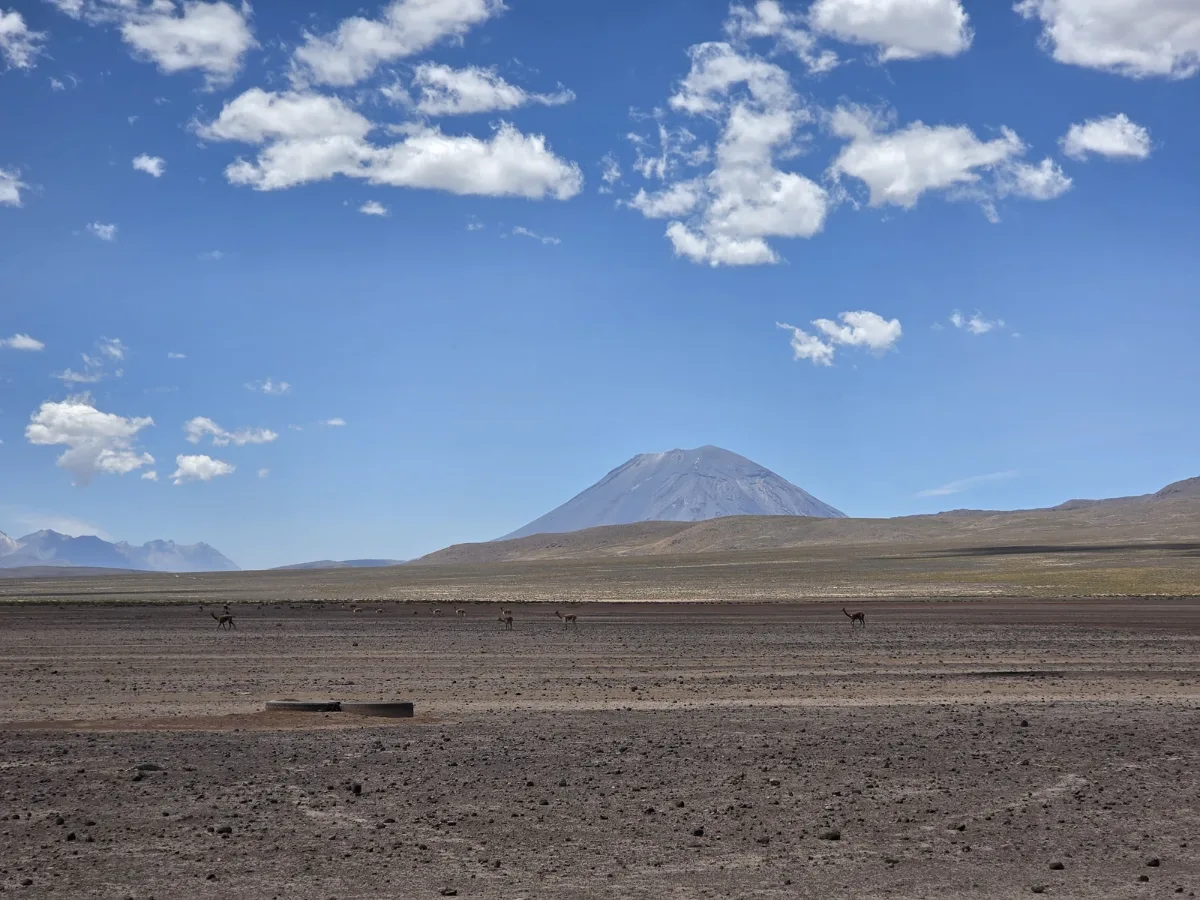
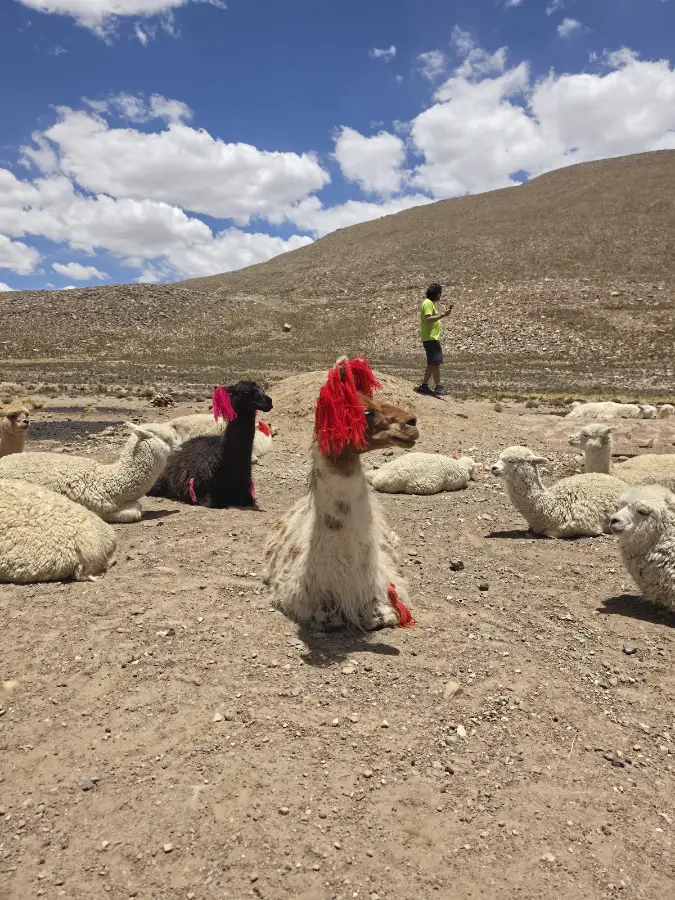
The city slowly disappeared behind us, replaced by vast open landscapes, mountains and the occasional group of animals wandering through the highlands. Llamas, alpacas and their wild relatives, the vicuñas, are all part of the Andean landscape. The Salinas y Aguada Blanca National Reserve, along the route towards Colca, is especially important for protecting wild vicuñas and their natural habitat.
Read the fact: Not Every Fluffy Andean Animal Is an Alpaca!.
And honestly, the scenery was incredible. One of the things I appreciated most about the tour was that we weren't simply sitting inside the minibus for hours without stopping. We made regular stops to stretch our legs, use the bathroom, grab something to eat or drink and take photographs.
And there were plenty of opportunities for that. I kept finding myself staring out of the window, waiting to see what would appear next. Sometimes a mountain panorama. Sometimes another animal. And sometimes just a landscape so enormous that it was difficult to capture properly in a photograph.
One thing became clear pretty quickly. The drive to Colca Canyon was already worth experiencing.
Chivay · A mountain village and a well-earned hot bath
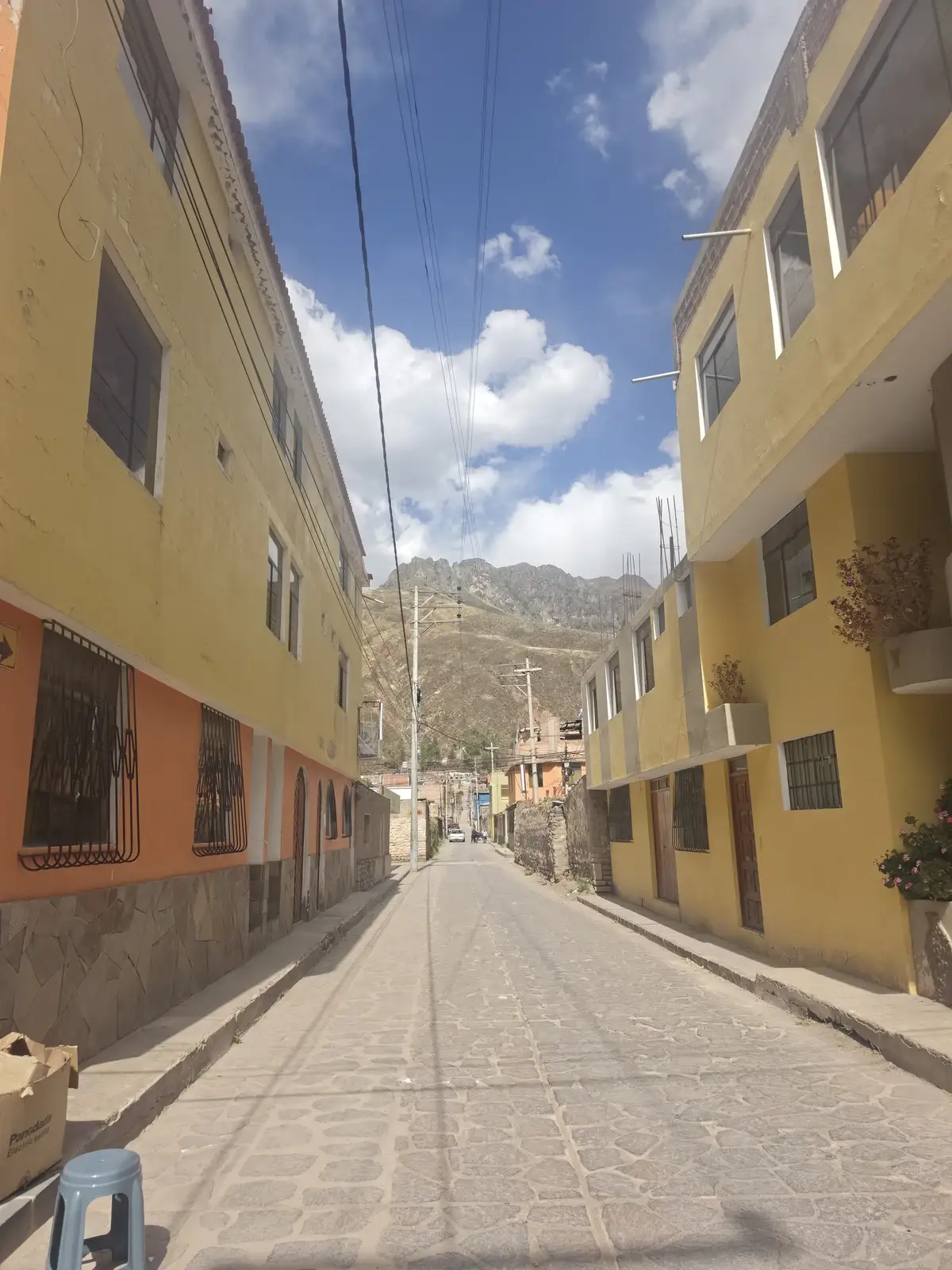
After spending much of the day travelling through the beautiful Andean landscape, we eventually arrived in Chivay. A small town surrounded by mountains, sitting at approximately 3,600 metres above sea level. And the atmosphere here was completely different from Arequipa. Less traffic, fewer buildings and a much more peaceful mountain setting.
This was where I would spend the night before continuing the adventure the next morning. By the afternoon, after a long day of travelling and exploring, there was one activity I was particularly looking forward to. The hot springs. And honestly, what could be better?
Spending the day travelling through the cold mountain landscapes, only to finish it by relaxing in naturally heated water. The Colca Valley has several thermal bathing areas, where underground geothermal activity heats the water. I couldn't think of a much better way to end the day.
After enjoying the warm water, I headed back towards the town. That evening, I found a small local restaurant, had something to eat and enjoyed a relatively quiet night. Nothing too complicated. No big parties. No wild backpacker stories. Just a good meal and some time to relax.
Sometimes that's exactly what you need. Especially when you know you'll be waking up at six the following morning.
Cruz del Cóndor · Would we actually see them?
The following morning, I was picked up from my accommodation at around 6 AM. And this was the moment I'd been looking forward to most. Condor spotting. Now, I'll admit something. I was actually a little sceptical. Wildlife doesn't appear on a timetable, so I knew there was no guarantee of seeing one.
So while I was excited, I wasn't getting my hopes up too much. Our destination was the famous Cruz del Cóndor viewpoint. One of the best-known locations in Peru for observing the Andean condor in its natural environment. And then... There they were. Wow. Just wow.
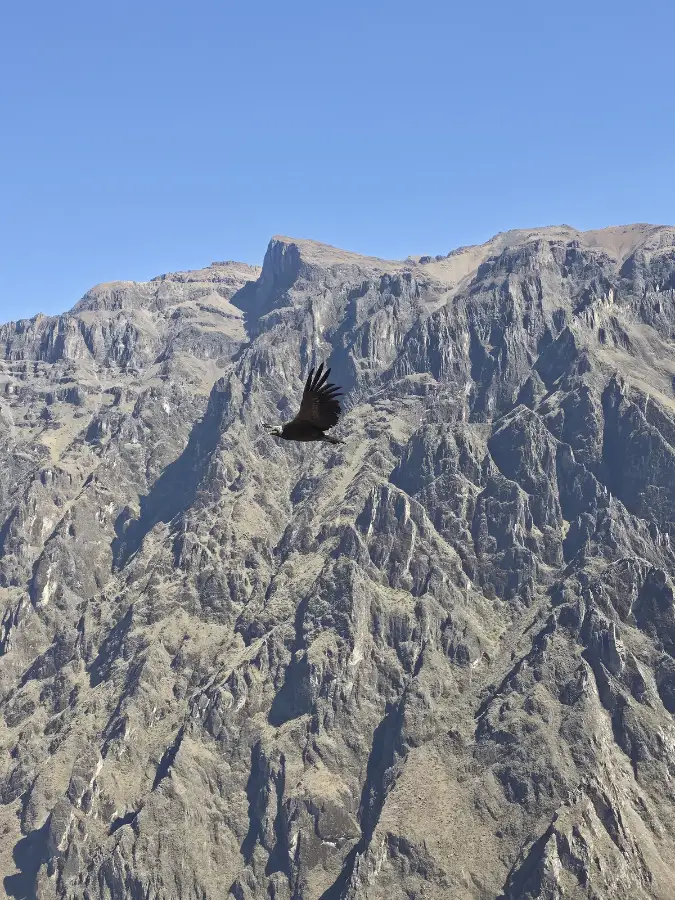
These birds are absolutely enormous. Watching them glide through the air above the canyon was one of those moments that photographs simply can't do justice. Their wings stretched out, moving almost effortlessly through the sky. Sometimes they appeared incredibly close. Other times they disappeared into the enormous landscape.
And I couldn't stop watching. An Andean condor can have a wingspan of around three metres. Three metres!
Read the fact: A Bird With a 3-Metre Wingspan?.
That's wider than most people are tall, and seeing that size in real life is something else entirely. What makes the experience even more impressive is how these birds use rising warm air currents to stay in flight. Rather than constantly flapping their wings, they can glide and circle above the canyon with surprisingly little visible effort.
And there I was, standing on the edge of one of Peru's most spectacular landscapes, watching these incredible animals in the wild. Definitely worth waking up early for. Actually, more than worth it. This was one of my favourite wildlife experiences in Peru so far.
A short hike · Getting closer to the canyon
After spotting the condors, we continued exploring the area. We also went on a relatively short walk of approximately two kilometres along the canyon area. And while this certainly wasn't a major trekking expedition, it was a really nice addition to the tour. Instead of only observing the landscape from the minibus or viewpoints, I could spend some time actually walking through it.
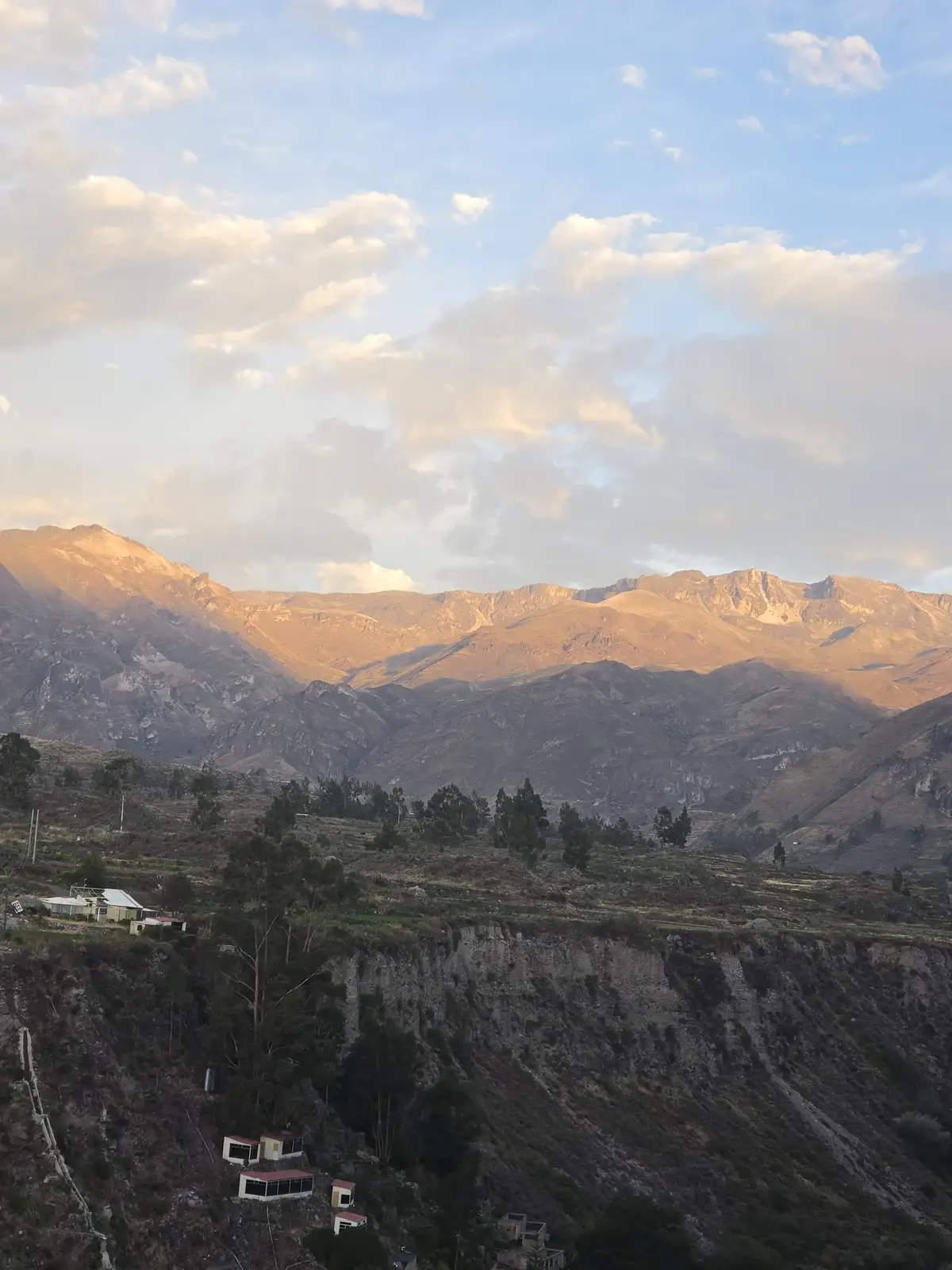
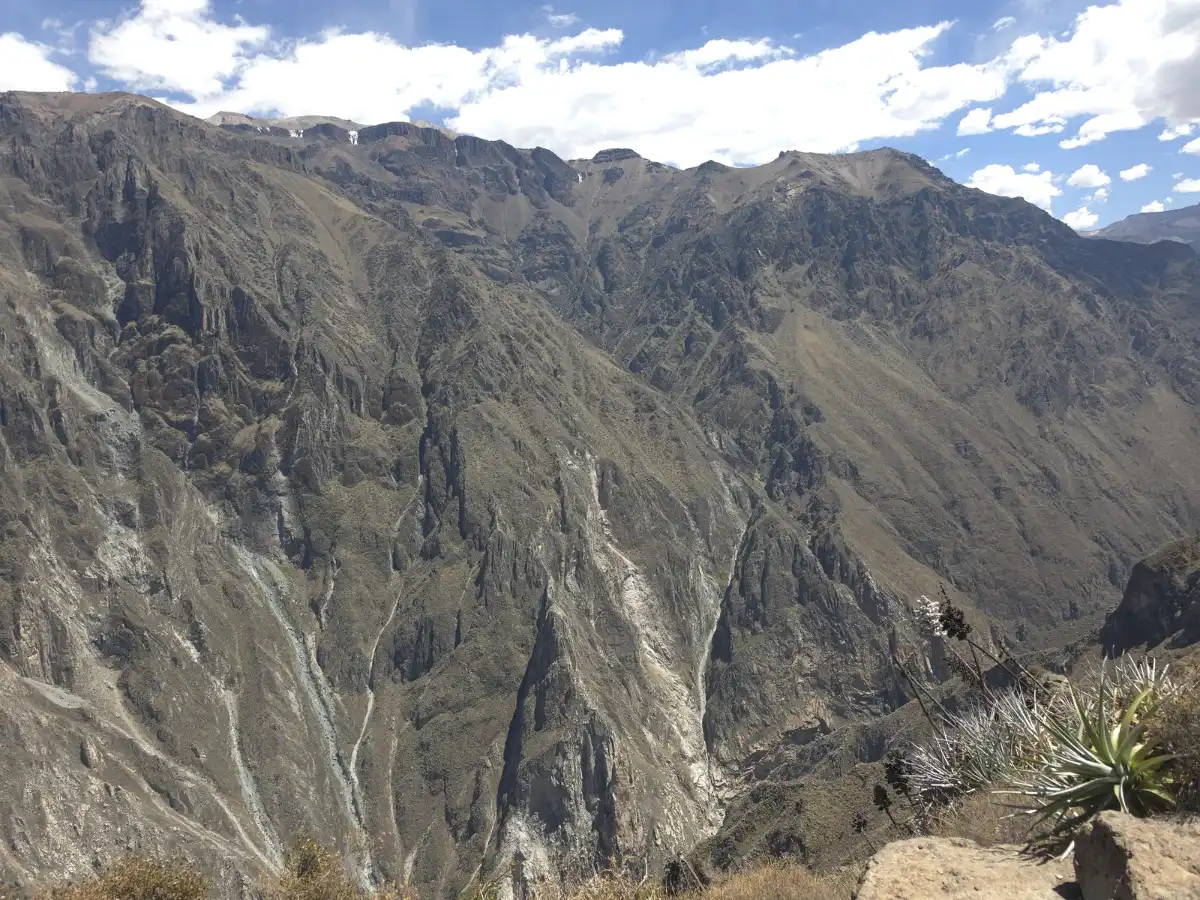
Taking in the scenery, enjoying the mountain air and stopping for photographs. The scale of Colca Canyon is difficult to comprehend until you're standing there yourself. Steep slopes, huge mountain walls and landscapes stretching far beyond what you can see. According to Peru's official tourism information, the canyon reaches depths of approximately 3,200 metres, making it one of the deepest canyons in the world.
That's difficult to imagine. And suddenly, that relatively short walk felt even more impressive. One important thing to know if you're considering a similar experience: A two-day sightseeing tour is not the same as a two-day trek into the canyon. Our experience was mainly focused on the landscapes, viewpoints, wildlife, hot springs and several shorter walks.
Personally, I enjoyed that combination. It allowed me to see a lot without spending two days exhausting myself on a demanding hike.
Cuy and cactus fruit · A very Peruvian lunch
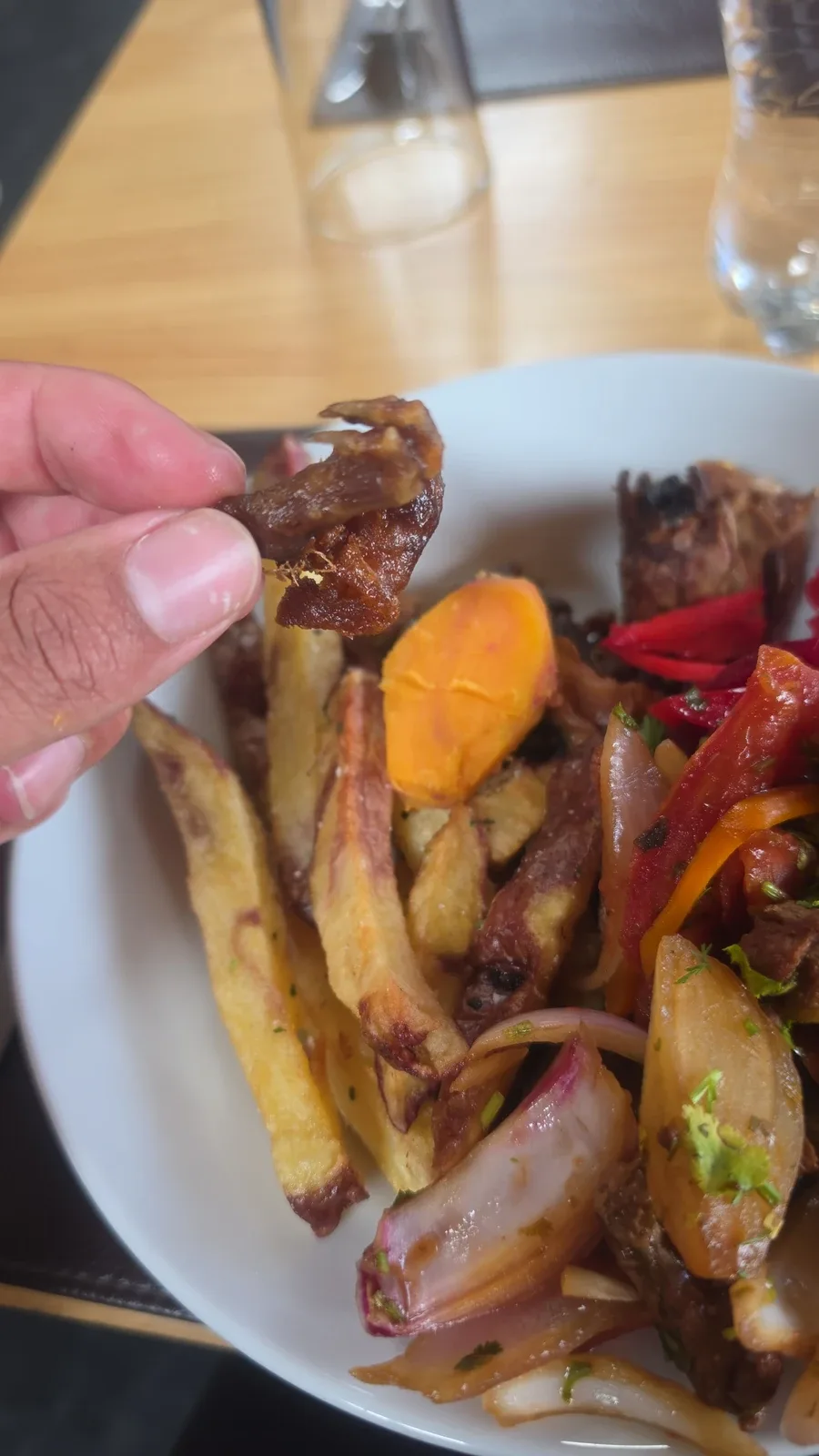
After exploring the canyon, it was time for lunch. And this time, I decided to try something that many travellers are a little hesitant about. Cuy. Or, in English... Guinea pig. Yes, seriously. The same animal that many people in Europe keep as a pet is a traditional food in the Peruvian Andes.
And although it might seem strange from a European perspective, cuy has been part of Andean food culture for centuries. So I figured that if I was going to experience Peru properly, I should at least give it a try. And that's exactly what I did.
Was it an unusual experience? Absolutely. But that's part of travelling, isn't it? Trying things you wouldn't normally eat or experience back home. Would I recommend trying it? If you're open to discovering traditional local food, definitely. You might love it, you might not. But at least you'll have experienced something genuinely connected to the culture of the region.
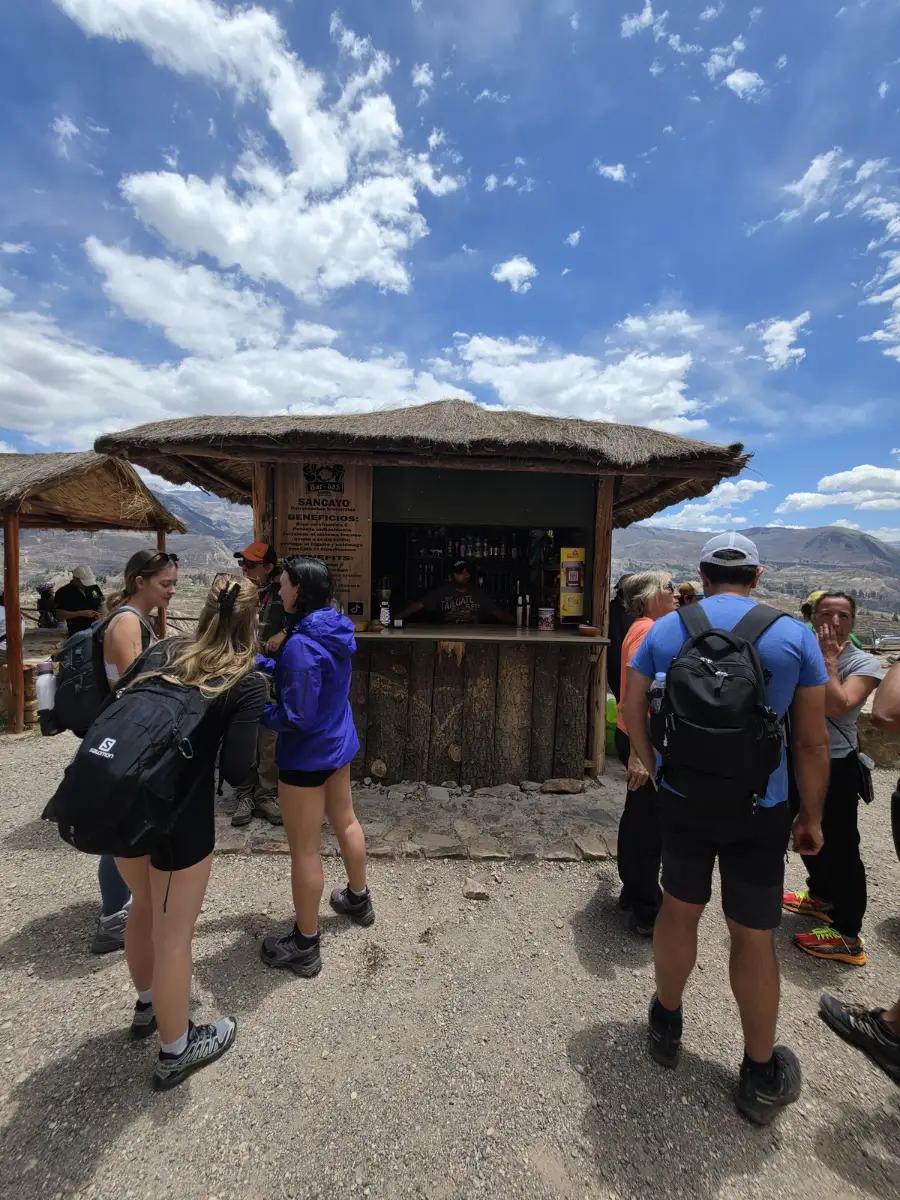
And the food adventure didn't end there. We also got to try a local cocktail made with cactus fruit. In the Colca Valley, a drink known as the Colca Sour is made using pisco and a local cactus fruit called sancayo. It's a regional variation of Peru's famous Pisco Sour, with the cactus fruit adding a distinctive sour flavour.
Read the fact: A Cocktail Made From a Cactus?.
Not exactly something I'd expected to discover in the middle of the Andes. But a pretty interesting experience nonetheless. And with that, the food part of the adventure was complete. A local dish, a regional drink and another experience to add to the travel memories.
Back to Arequipa · And straight on to the next destination
Eventually, it was time to head back. After two days of mountains, animals, local culture, hot springs and incredible views, we began the approximately four-hour journey back towards Arequipa. And honestly, I was pretty tired by this point. The early mornings, travelling and constant exploring had definitely caught up with me.
But it was the good kind of tired. The kind where you look back at the last few days and realise how much you've actually experienced. And I was especially glad that I'd decided to take this little solo detour. Because if I'd simply followed the same plans as everyone else, I might have missed all of it.
Once we arrived back in Arequipa, there wasn't exactly much time to relax. I still had to collect my belongings, pack my backpack and get ready for my next flight. Next stop: Lima. Again. But that's the funny thing about travelling. Sometimes you spend hours moving from one place to another, only to end up back where you started a few days earlier.
Except now, you've got a whole new collection of memories. And in my case, some pretty incredible ones.
Was my solo detour worth it?
Absolutely. Would I recommend Arequipa? Yes. Would I recommend taking an overnight bus in Peru? Definitely, especially if you can get one of the comfortable reclining seats. And would I recommend spending two days exploring Colca Canyon? Without a doubt. For me, the best parts were the incredible landscapes, seeing the condors in the wild and enjoying the quieter moments around Chivay.
But there was something else that made this experience special. The independence. The freedom to decide where I wanted to go, what I wanted to see and how I wanted to spend my time. I love travelling with my friends, and I wouldn't change that.
But occasionally going your own way doesn't mean you're enjoying the journey any less together. If anything, I think it makes the entire experience more interesting. You return with different stories, different memories and new things to share. And sometimes those unexpected detours become the experiences you remember most.
Take the scenic route. You never know what you might find. 🌎
— DainyelOnTheMove
Planning your own Colca Canyon adventure?
For an idea of the route and available activities, you can check this two-day Colca Canyon tour on GetYourGuide. The current listing returns to Arequipa, which matches my trip. Puno is an optional onward transfer at extra cost. Check your selected option and drop-off before booking.
A few practical things worth knowing:
- Duration: Two days and one night.
- Accommodation: Chivay is a common overnight base.
- Highlights: Andean wildlife, mountain viewpoints, hot springs and condor watching.
- Colca entrance fee: S/70 for a foreign adult at the time of my visit.
- Extra costs: Confirm whether accommodation, the tourist entrance ticket, thermal baths and meals are included in your chosen package.
- Hiking: My experience included a relatively easy walk of around two kilometres, not a full canyon descent.
- Altitude: Parts of the journey are significantly higher than Arequipa, so take the elevation seriously.
For official destination information, see Peru Travel's Colca Canyon guide. This is my personal experience rather than a guarantee of another tour's exact itinerary or inclusions.
The operator’s current route runs from Arequipa via Yura and the Salinas y Aguada Blanca highlands to Chivay. Day two visits Cruz del Cóndor before returning through the valley to Arequipa. Its listed village stops include Pinchollo, Maca and Yanque; these are operator itinerary details, rather than a claim that every stop was part of my own trip.
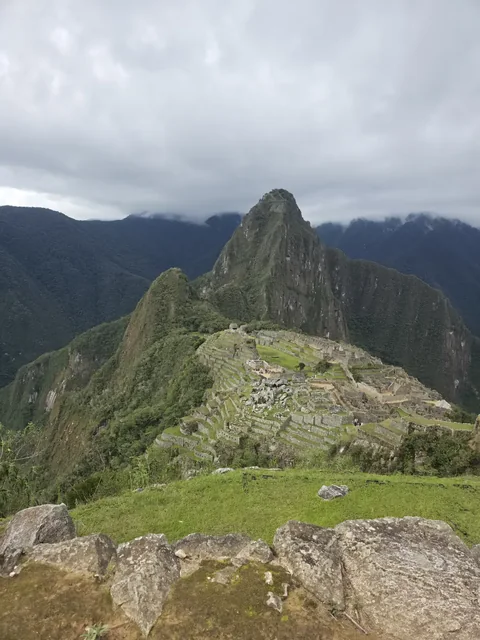
Read the previous chapter: Cusco to Machu Picchu: my 2-day Inca Trail.
 Through my lensPeru, through my lens.
The photographs open here, without leaving the story.