
Opening
Two days of resting later, here it is: my Short Inca Trail to Machu Picchu.
I would describe our two-day trip as one very full day of walking, followed by a much gentler morning exploring Machu Picchu. There were early alarms, beautiful views, a guide with an impressive supply of jokes, and a camera roll that ended up with 575 photographs.
But before the stone steps and the famous view, there was Cusco. And that city deserved more of my attention than I had expected.
Three travellers. Three reactions to the altitude.
Arriving in Cusco felt like a slightly nervous experiment. The city sits around 3,400 metres above sea level, and I had read enough stories on social media to wonder how I would cope.
As it turned out, the three of us could almost have been a demonstration of how differently people react. One of my travel companions felt properly unwell and spent a day feeling sick and nauseous. Another had milder symptoms. I was fortunate: apart from getting out of breath more quickly on the stairs, I felt pretty good.
That was my experience on this visit. It certainly did not mean the altitude was imaginary for the others. The CDC’s altitude guidance explains that susceptibility varies and physical fitness does not protect you from altitude illness. Giving yourself time to adjust matters.
Cusco was a very good first impression.
We arrived in the evening and had our briefing with Eco Andes Trekking that same night. Kreoger Berly Chavez, the company’s founder and our guide, talked us through the route, what we needed to bring and the things to keep in mind. It was a useful introduction, with enough jokes to keep it from feeling like a classroom. After the briefing, I went into town for something to eat.
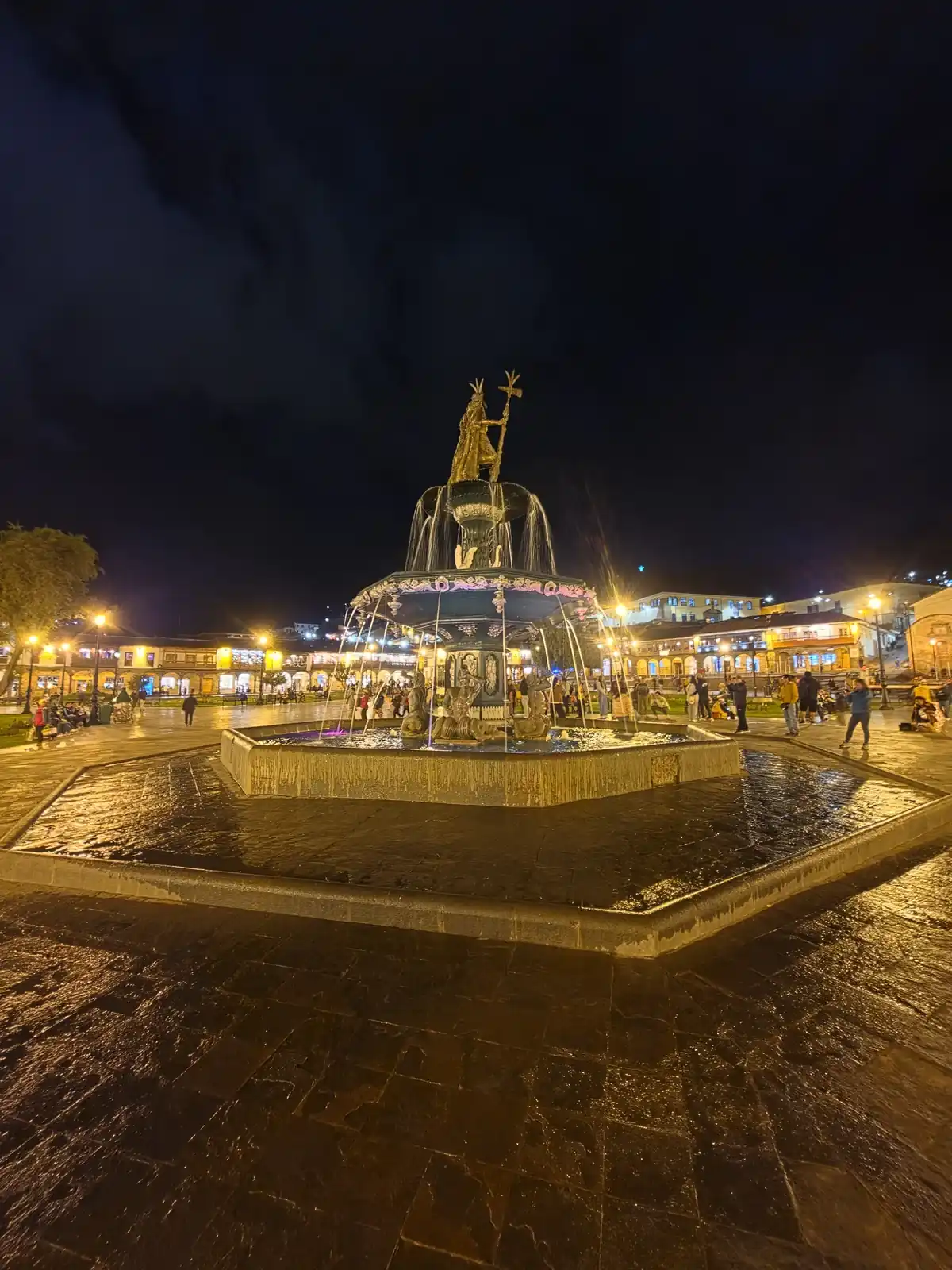
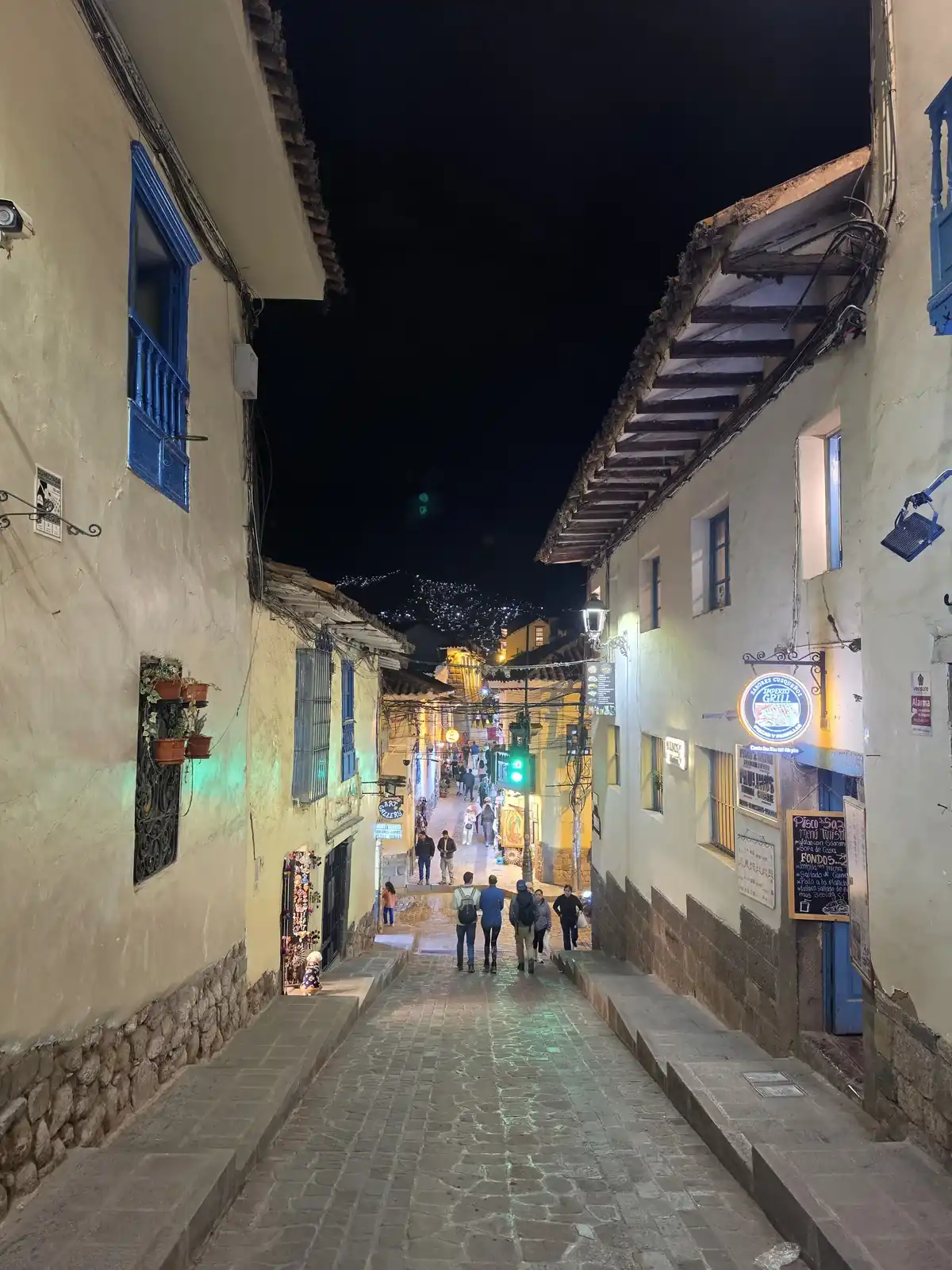
Honestly, I had not expected Cusco to be this beautiful. It quickly became one of the loveliest cities I have visited. I loved the architecture, the streets and the comfortable atmosphere. A fairly modest-looking entrance could lead into a shop that was much bigger, smarter and more luxurious than I had imagined from outside.
There were little souvenir shops everywhere, along with plenty of places selling alpaca-wool clothing. I enjoyed simply wandering around, and I felt safe doing so. That was my own impression during this stay, and it made the first evening an especially good welcome.
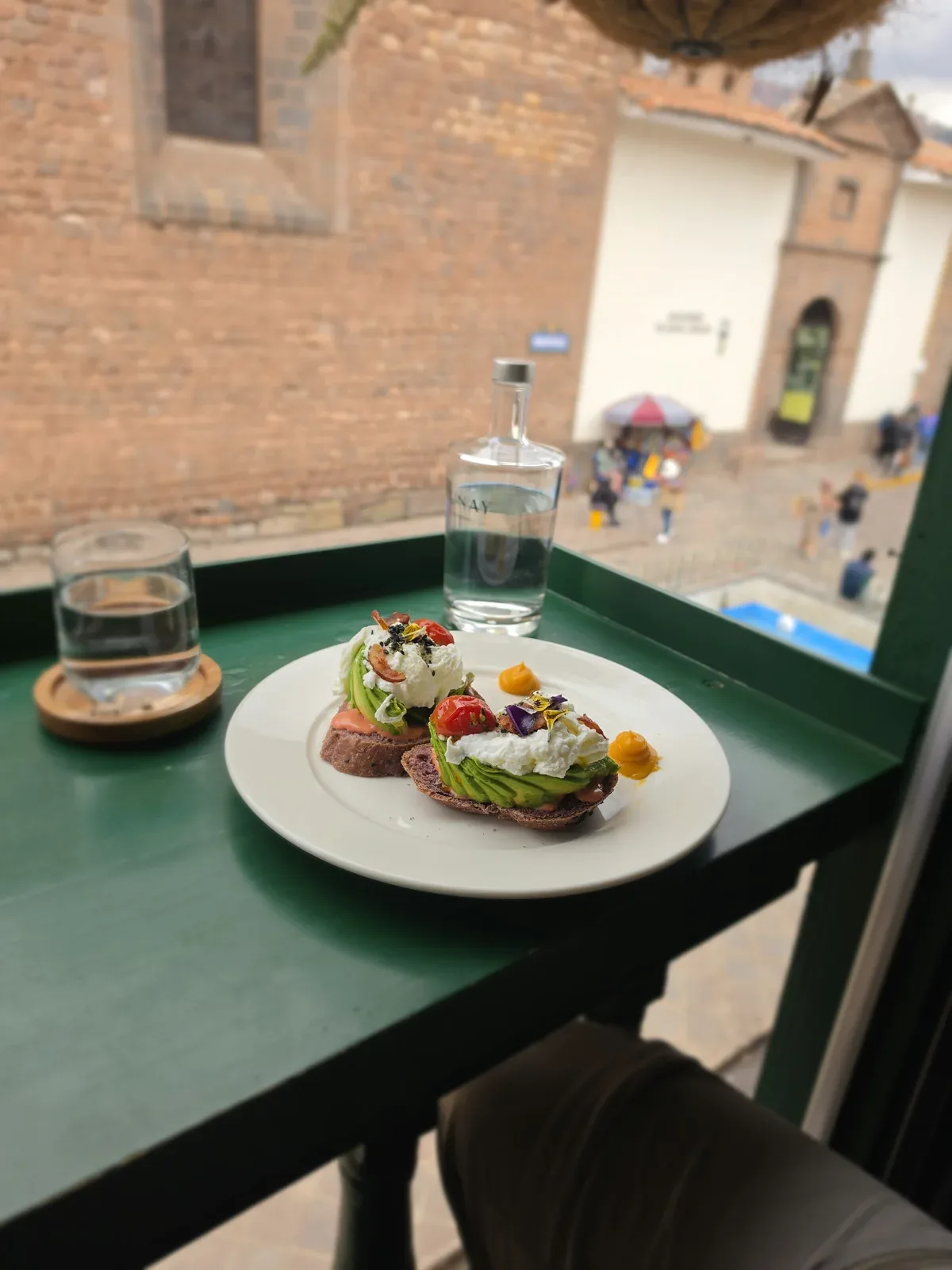
The following morning, I was out again around nine or ten for breakfast and a closer look at the city. People-watching was part of the pleasure: unfamiliar faces, different styles and the striking traditional clothing worn by many of the women we saw.
We spent much of the day going in and out of shops. I also noticed how many massage places there were, so I fitted in a massage of my own. A very pleasant decision. Later came dinner at a local restaurant, then the prospect of an extremely early alarm.
A 3 a.m. alarm and a beautiful train ride.
Three in the morning. Yes, really.
I had barely slept, so I was already tired when the driver collected us. From Cusco, the journey to Ollantaytambo took roughly an hour and a half. The distances might not look enormous on a map, but the roads and traffic make this a very different sort of journey from driving on a Dutch motorway.
Ollantaytambo looked like a lovely little town, with plenty geared towards visitors. Our immediate destination was the station. From there, the train took us towards kilometre 104, where our walk would begin near Chachabamba.
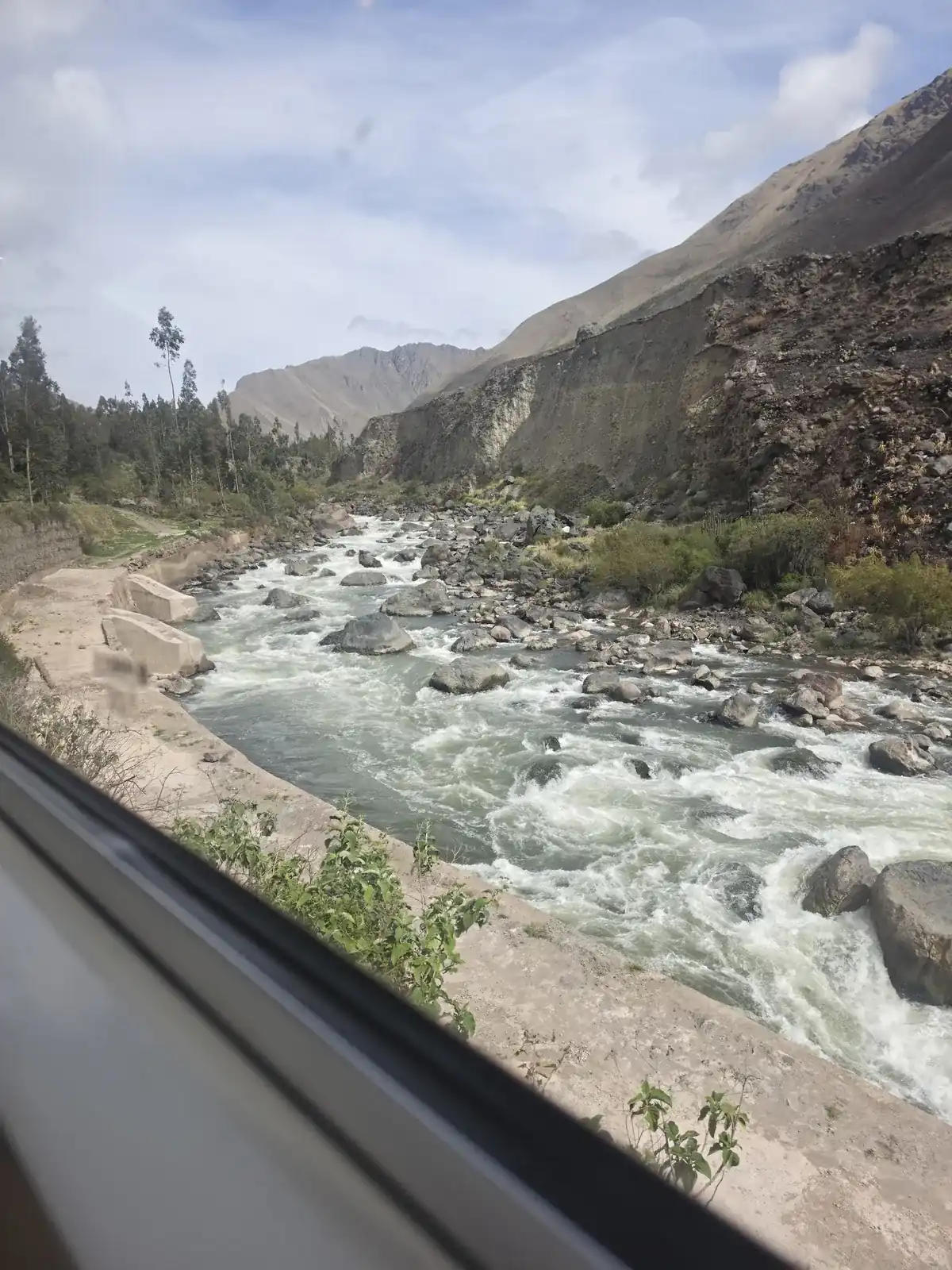
Despite the early hour, that ride was one of the most beautiful train journeys I have taken. There was so much to look at, including glimpses of archaeological sites along the way. The scenery was already a reason to be pleased we had got out of bed.
We reached the start of the trail at around 7:30 a.m. Ahead of us: roughly twelve kilometres. Twelve kilometres sounds quite friendly when you say it quickly. The climbing adds a little more to the conversation.
Stone steps, small pauses and a very good guide.
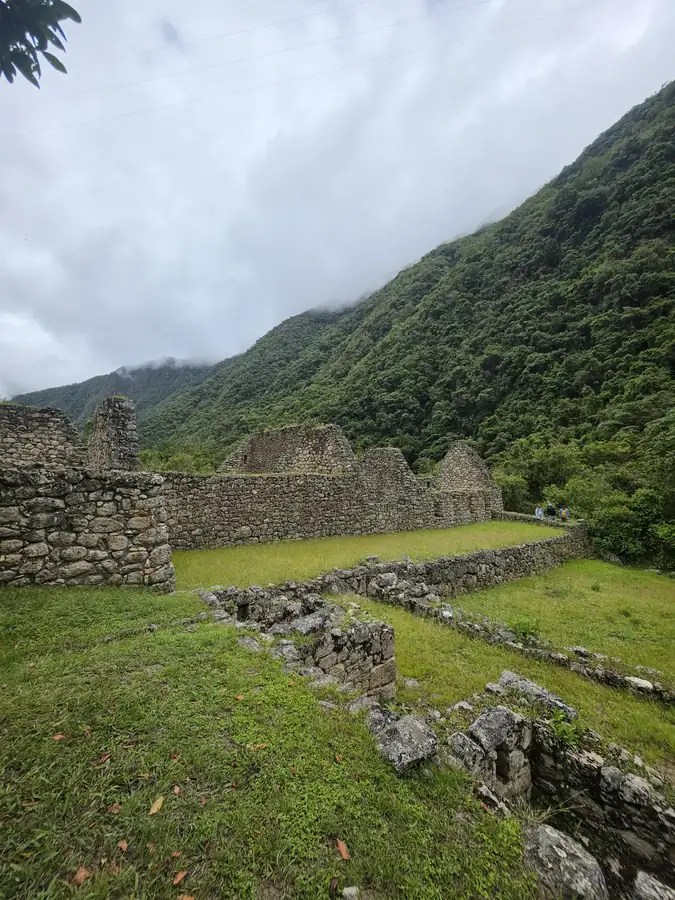
Almost immediately, we were exploring the Inca site at Chachabamba. It set the rhythm for the day: walk for a while, stop somewhere interesting, listen, take it in, then continue.
Kreoger was a fantastic guide for us. He talked, joked and kept the conversation going, while sharing a huge amount about the places and the landscape. We had booked a private tour, which gave us plenty of room to ask questions and follow what he was explaining.
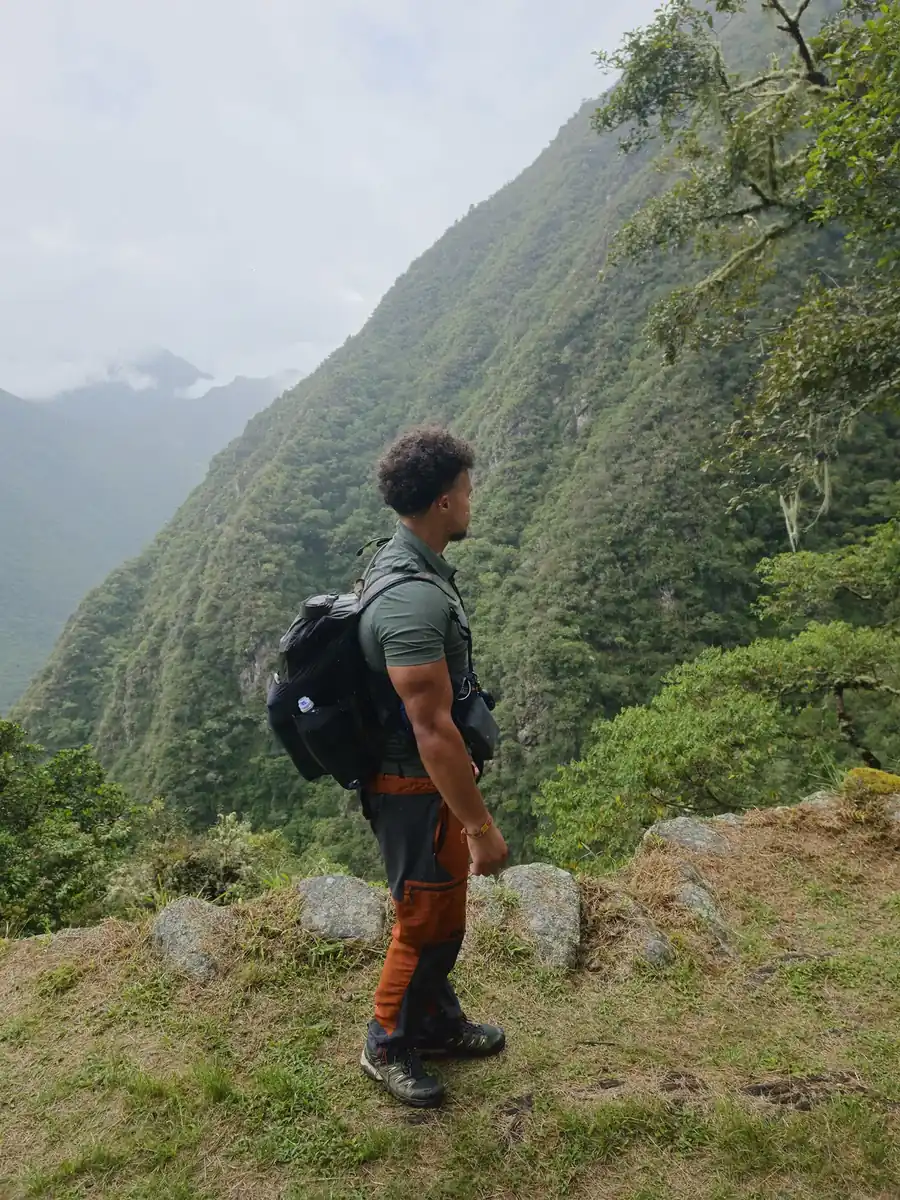
The walk felt manageable to me, although I would not call it effortless. There were substantial climbs, followed by flatter stretches where I could catch my breath. Those changes of pace helped. We also took regular short breaks for explanations and water. My simplest practical tip is to bring enough water and keep it easy to reach. You will appreciate it.
Coca leaves also come up a lot in conversations about travelling at altitude in Peru. You see them chewed or prepared as tea. I initially understood them as a useful answer to tiredness and altitude symptoms, but that needs a more careful explanation.
Wiñay Wayna, a waterfall and a very welcome lunch.
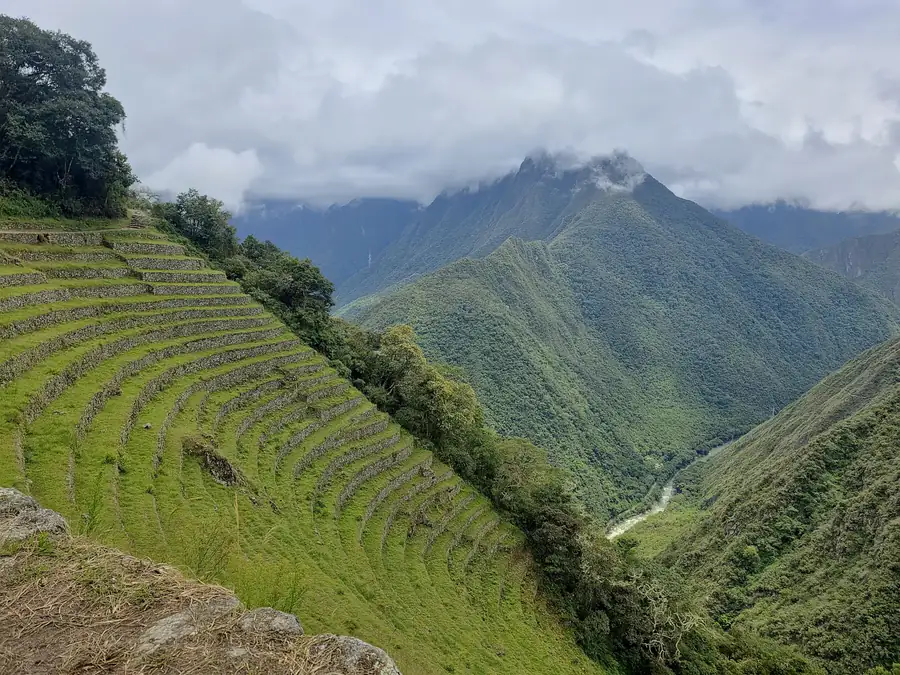
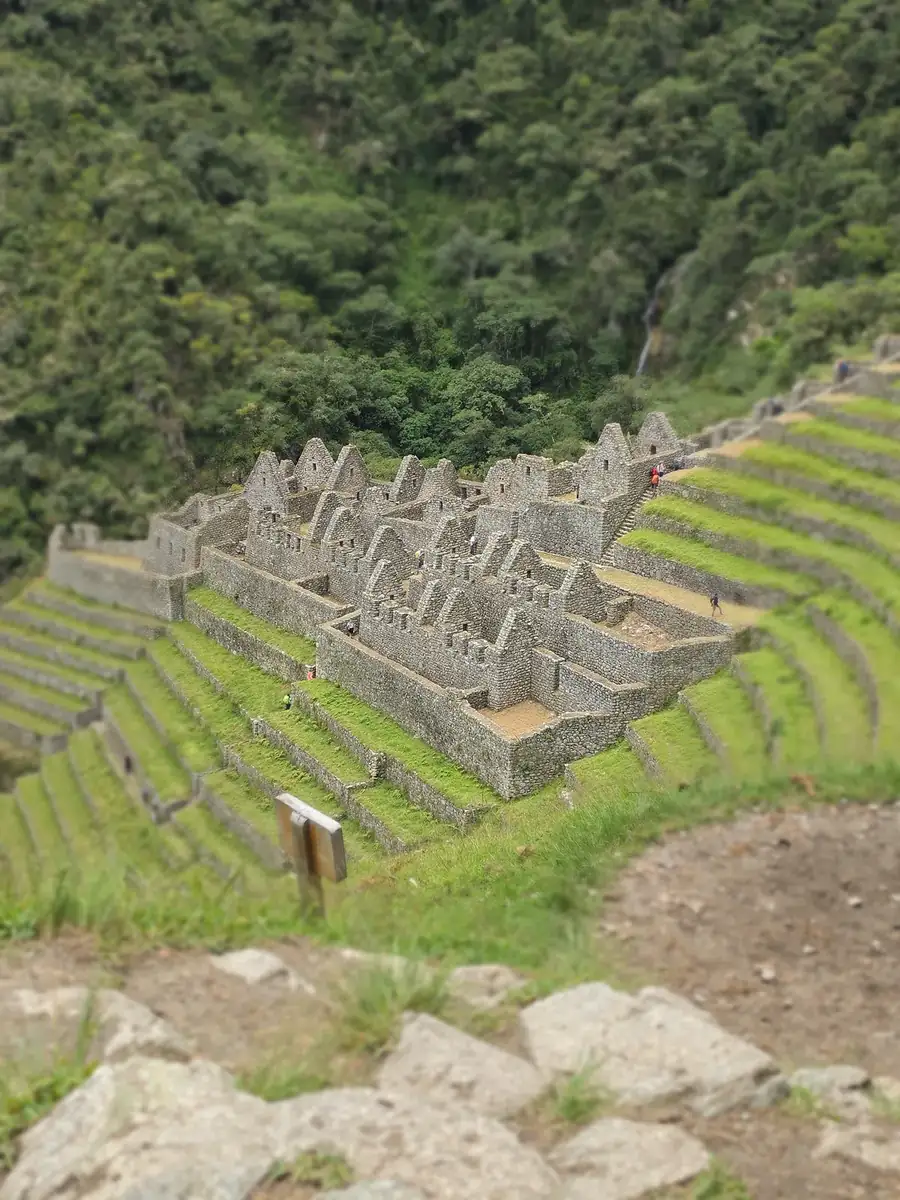
Along the way came viewpoints, more ruins and a waterfall where we could pause for a moment. Then we could see the terraces of Wiñay Wayna from a distance. Reaching them took some effort. Seeing them up close was worth it. The scale of the place, with its terraces stepping across the slope, made this one of the standout stops of the walk.
Around midday, it was time for lunch. We had been given a packed lunch earlier in the day, and it was a generous one: a mandarin, a banana, two sandwiches—one with chicken and one with alpaca meat—plus chocolate, a brownie and quinoa salad. I was very happy to open that box. We still had more walking ahead of us.
Other groups kept appearing at the same stops, so there were conversations and jokes with fellow walkers too. We had our own guide, but the trail still had a sociable side.
Forty-five minutes at the Sun Gate.
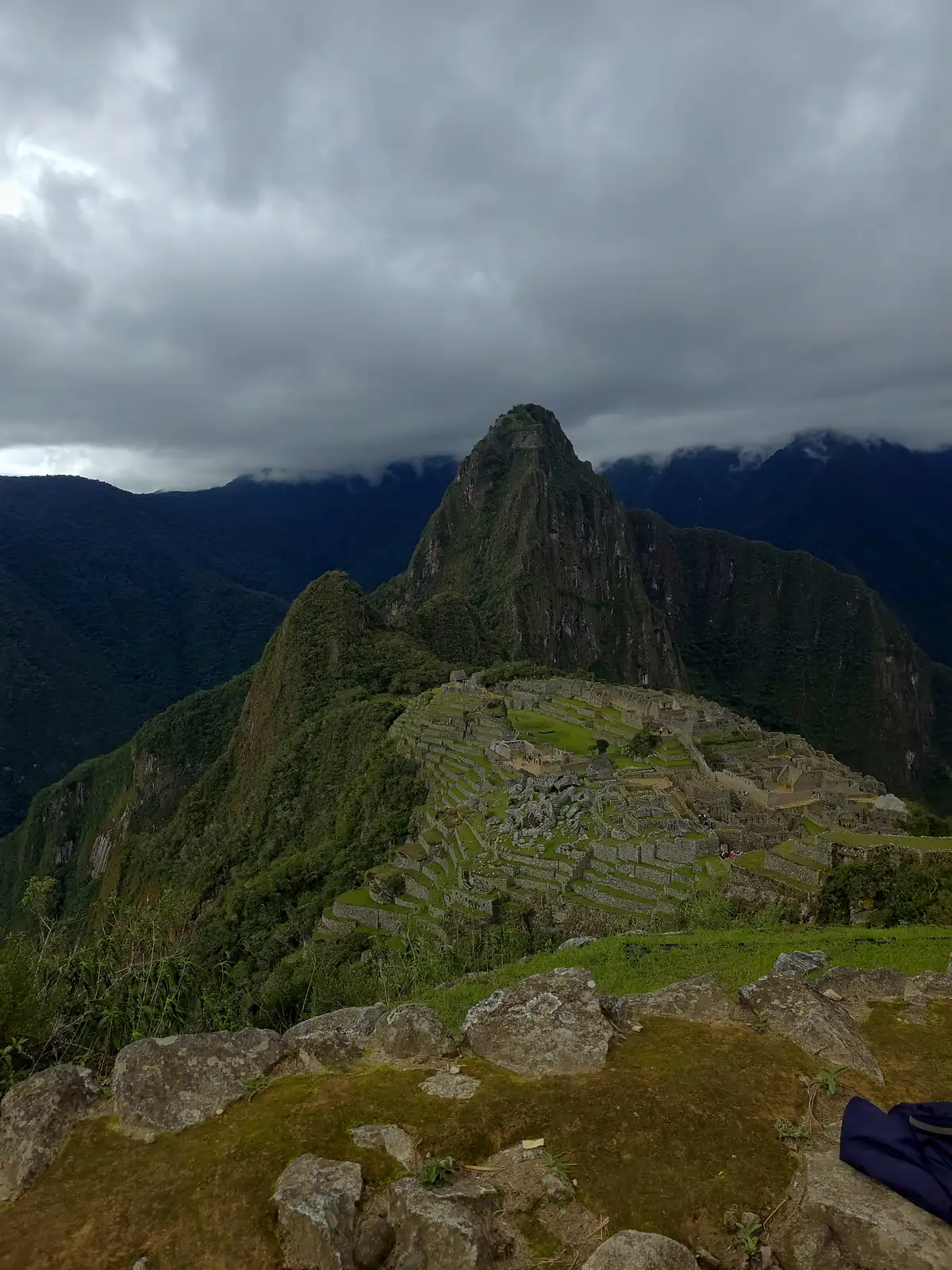
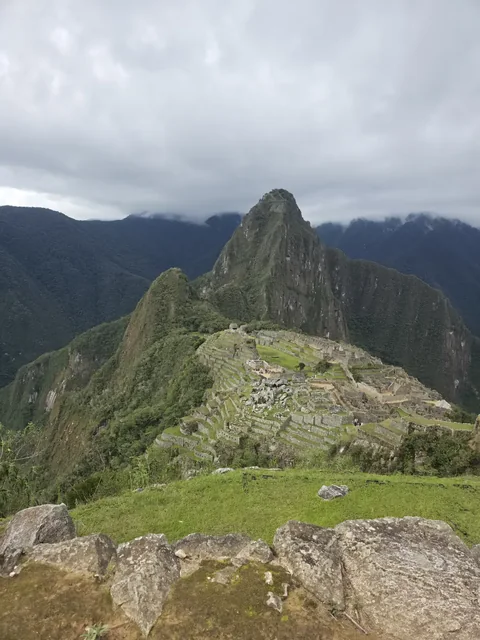
After roughly another hour and a half of walking, we reached the Sun Gate, or Intipunku. And there it was: our first view of Machu Picchu. What a moment. We had been lucky with the weather. There had been light rain here and there during the hike, but I had found it quite refreshing. Between the climbing and the drizzle, staying completely dry had stopped being much of a realistic ambition anyway.
At the Sun Gate, we had about forty-five minutes to enjoy the view. That gave me time to stop thinking about the next stretch of walking and let the place sink in. After the early start, the train and all those steps, it was a very good place to sit for a while.
Then we continued downhill towards the different viewpoints above Machu Picchu. The afternoon was far from finished.
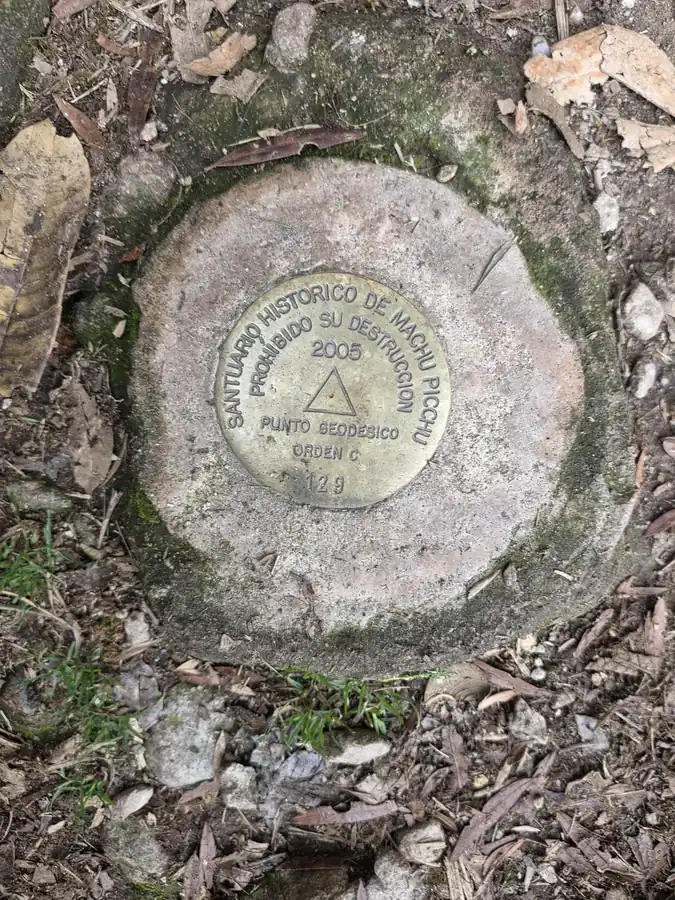
Enough photographs to open a small museum.
Kreoger seemed determined to make sure we went home with photographs. A lot of photographs. By the time I looked through my gallery, I had 575. Enough material for a small museum, or at least a fairly demanding evening of choosing favourites.
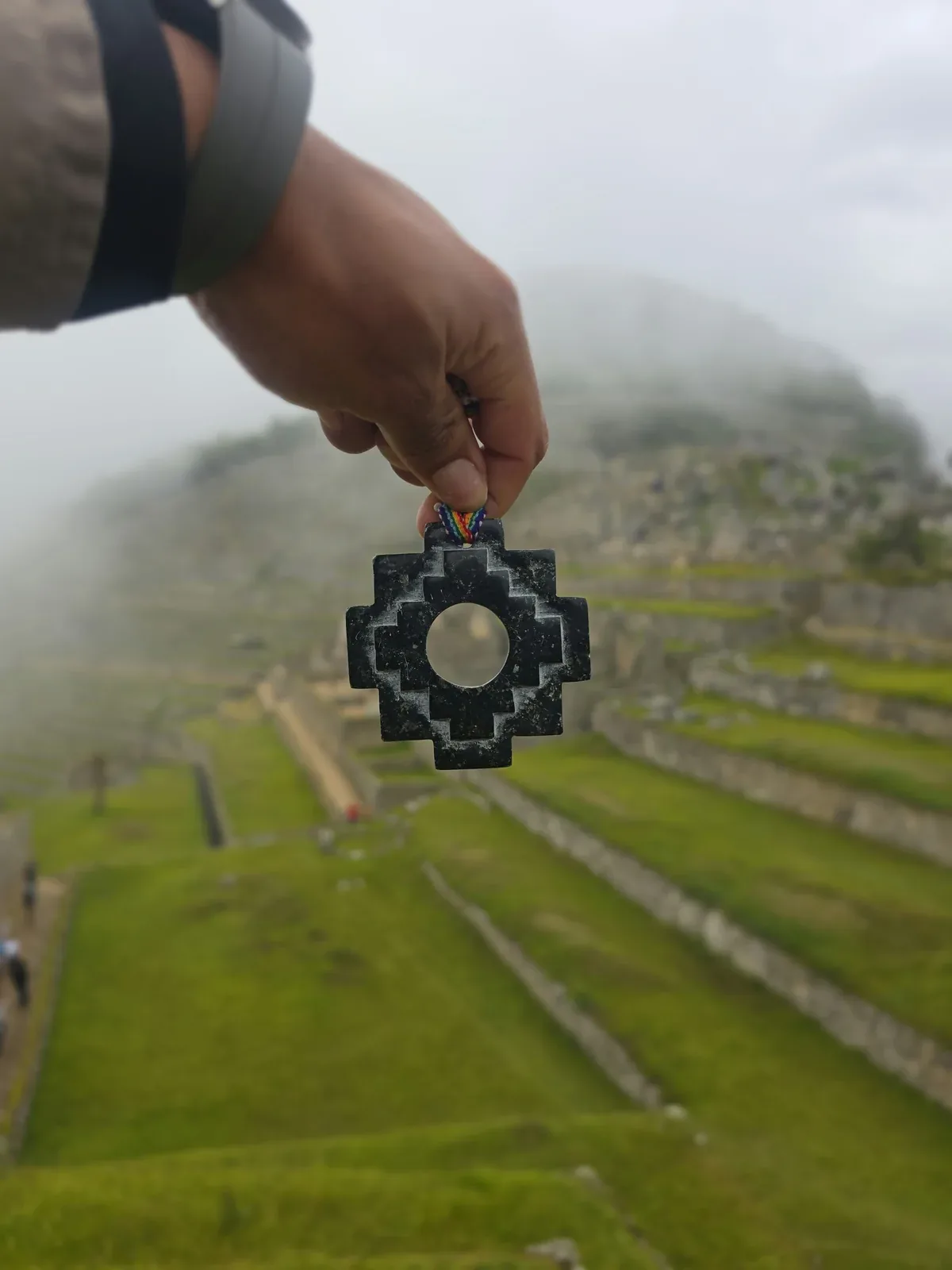
Moving between viewpoints and taking pictures filled another good part of the day. We reached the familiar, much-photographed viewpoint at around 3:30 p.m. By roughly five, we were down in Aguas Calientes after taking the bus from the site. One small detail from my Machu Picchu photographs has a much bigger story: the chakana pendant and its Andean meanings.
Eco Andes had arranged a good hotel for us, with breakfast included. We went for something to eat and a drink, but it was an early night. We were all tired, and the next alarm was already waiting for us. This time: five in the morning.
The sunrise that stayed behind the clouds.
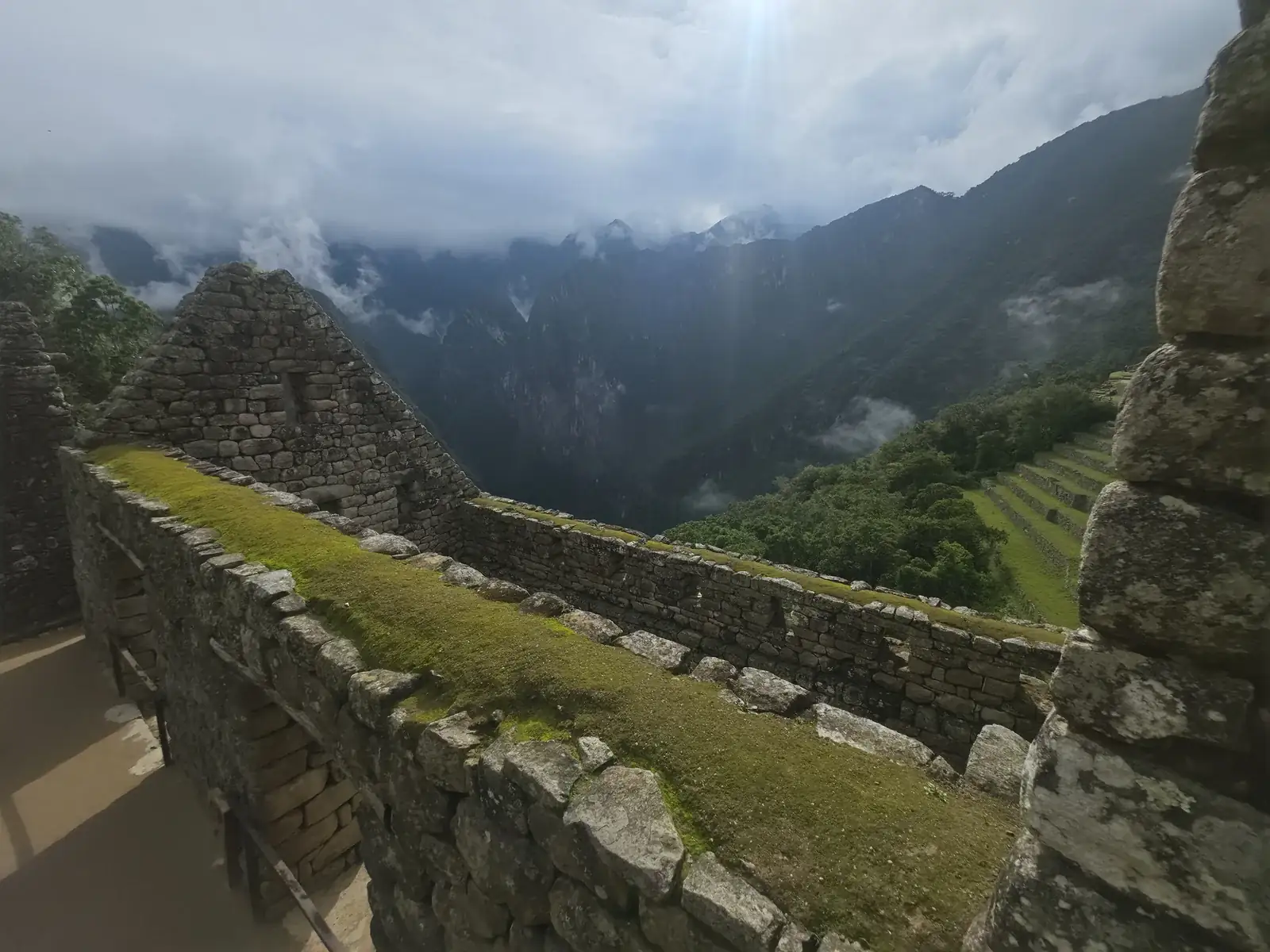
We ate breakfast quickly and met our guide again at about 5:20 a.m. Then it was back up to Machu Picchu for the visit inside the site. Kreoger explained how the buildings had been constructed and how people had lived there. Walking among the stonework gave us a different experience from looking down over it the previous afternoon.
The early start was meant to give us sunrise, but the clouds had other ideas. There was no clear sunrise for us that morning. I also want to be honest about the timing. Although we had some free time available at Machu Picchu, we were back in town at around 8:30 a.m. Our train was not until one in the afternoon. That left quite a gap.
Looking back, I would have been happy with a little more sleep and less waiting afterwards. If I were arranging this again, I would ask how the site visit, free time and return train fit together before settling on the schedule. That does not take away the view from the day before, or what we learned inside the site. It is simply part of how our two days actually felt.
Back in Cusco, with a little energy left.
The return involved roughly an hour and a half on the train, followed by about two hours in the car back to Cusco. After so much walking, there was plenty of sitting still on the way home. And somehow, that Thursday evening, we still found the energy to go out. We ate at República del Pisco in Cusco, then made a night of it. After our early alarms, the evening had a rather different rhythm.
I came away very happy with our private guide and with the walk itself. Cusco had been a wonderful surprise, and arriving at Machu Picchu on foot gave the first view a build-up I will remember. The early starts and the waiting belong in that memory too.
The next job was recovering—and doing something about those 575 photographs.
A few things I would check before booking.
If you are considering the same trip, Eco Andes’ Short Inca Trail page is a useful place to start. Its route links kilometre 104, Chachabamba, Wiñay Wayna and the Sun Gate with a hotel night in Aguas Calientes and a Machu Picchu visit the next day.
- Ask for your actual pickup, entry and return-train times. The itinerary currently online differs from the timings we experienced.
- Confirm the hotel and meals in your own booking. The operator’s page currently mentions different hotel and restaurant names in different sections.
- Pack your original passport, reliable walking shoes and a rain layer. Those are also on the operator’s packing list.
- Give yourself time to adjust to the altitude. If symptoms worsen, stop ascending and seek medical advice; the CDC’s linked guidance is worth reading before you travel.
- Consider whether you prefer a private tour. We really appreciated the conversations and the chance to ask our own questions.
This is my account of our November 2026 trip. I checked the operator’s page on 14 November 2026 and have kept its description separate from our own experience. Booking details may change. Before this full story, I shared the shorter Inca Trail Field Note.
Take the scenic route.
 Through my lensCusco & the Inca Trail.
The photographs open here, without leaving the story.