
Opening
Eight nights. Somehow, that was all it took for Curaçao to feel like the perfect start to a much bigger journey.
There were beach days that turned into nights out, nights out that somehow ended with food from a truck, and slow mornings when doing almost nothing felt like exactly the right plan. I got to spend time with family, meet people I hadn't expected to meet, and revisit a place that means more to me than just another destination on the map.
And yes, I also climbed Curaçao's highest mountain. Let's just say I was significantly more confident at the bottom than I was halfway up.
A warm welcome. And a very easy first evening.
We landed at Curaçao International Airport at around 7 p.m. on Wednesday, 28 October, after our flight from Amsterdam. From the moment we collected our bags, everything went surprisingly smoothly.
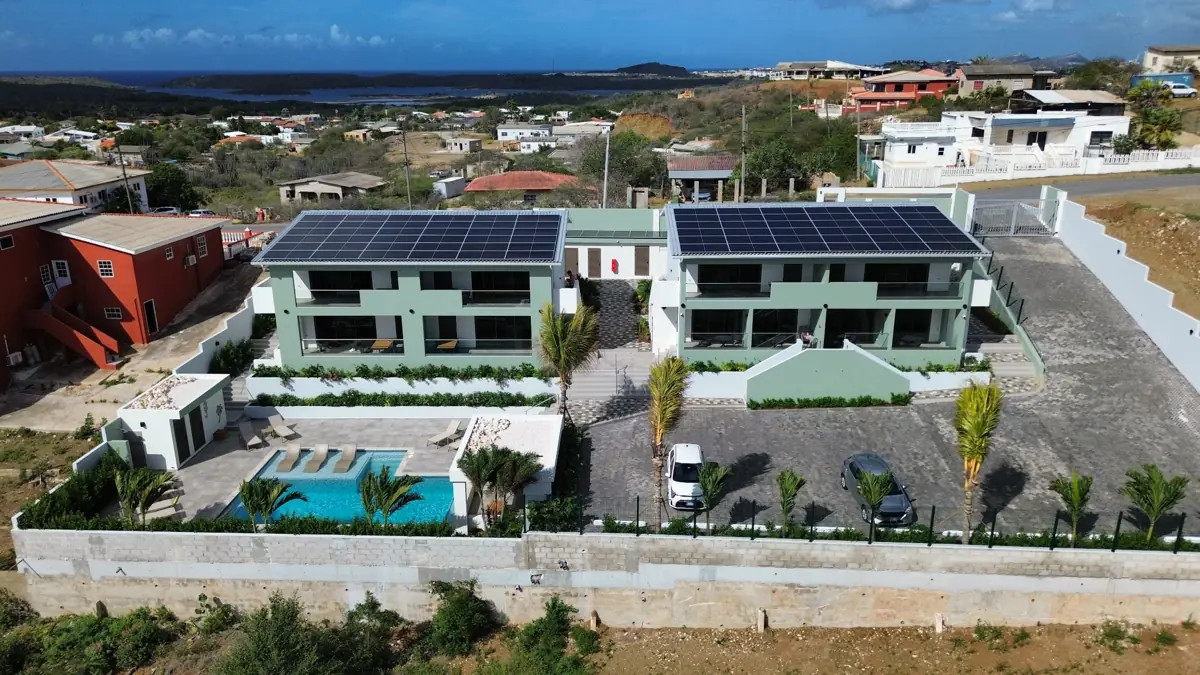
We'd arranged a Kia Picanto through By June. We met the pick-up team at the agreed spot, took a five-minute ride to collect the car, and had the keys in our hands almost immediately. About half an hour later, we pulled up at Bientu Resort.
The welcome was genuinely warm. Someone showed us around our apartment, which still felt brand-new. We were told that the resort had only been welcoming guests for about three weeks. It sits up on a hill, where the breeze turned out to be one of my favourite little details of the stay.
A little island fact: Bientu means wind in Papiamentu. The resort's name is a nod to Curaçao's cooling trade winds. Honestly, after a hot day outside, you understand the appeal. Source: Bientu Resort
We ended our first evening the Curaçao way: with truk'i pan. These roadside food trucks and grills come alive after dark, serving freshly grilled food to people heading home, heading out, or simply following the smell. It felt like a proper welcome back. More about truk'i pan
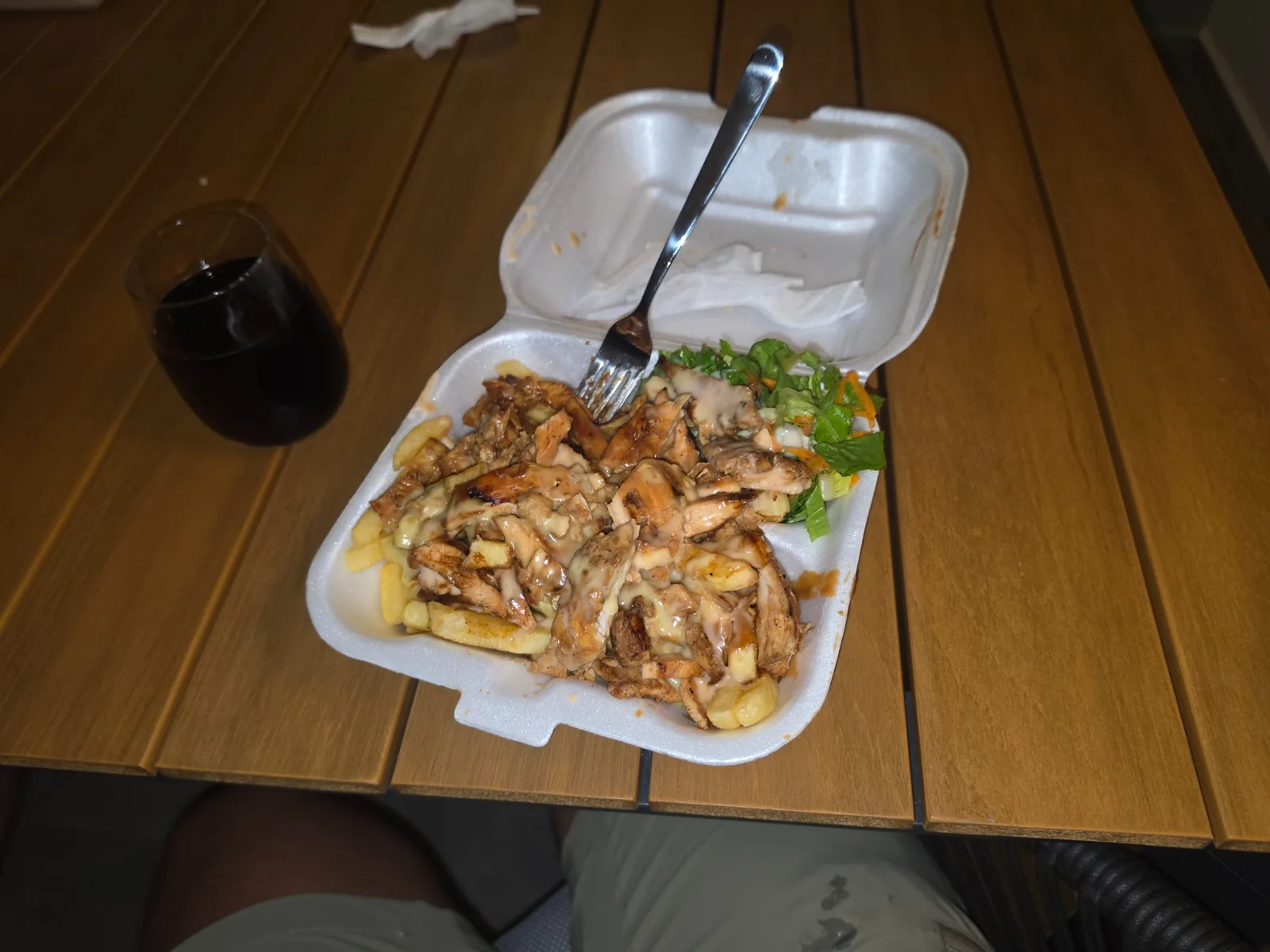
Local food, familiar faces and a night that kept changing plans.
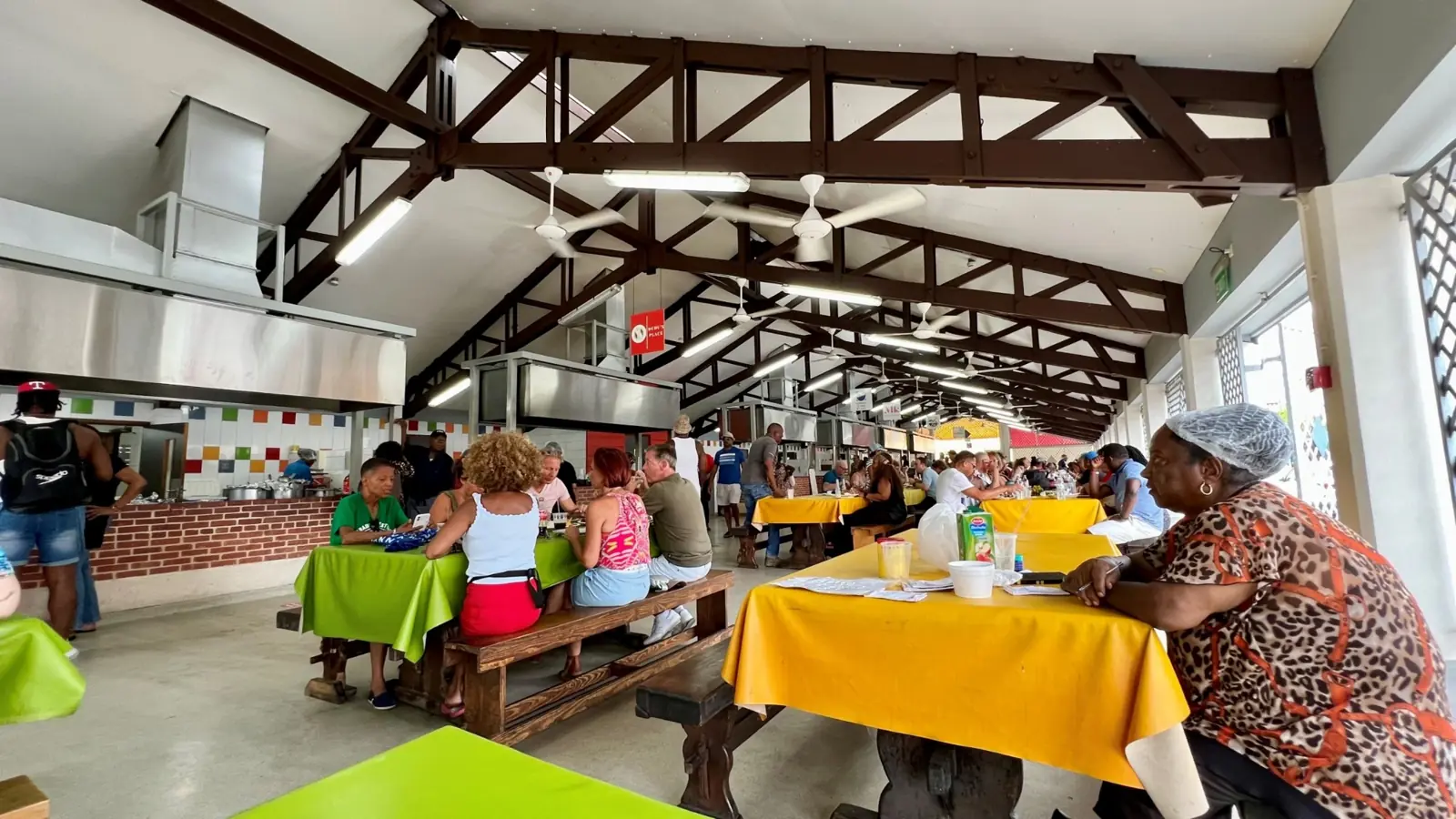
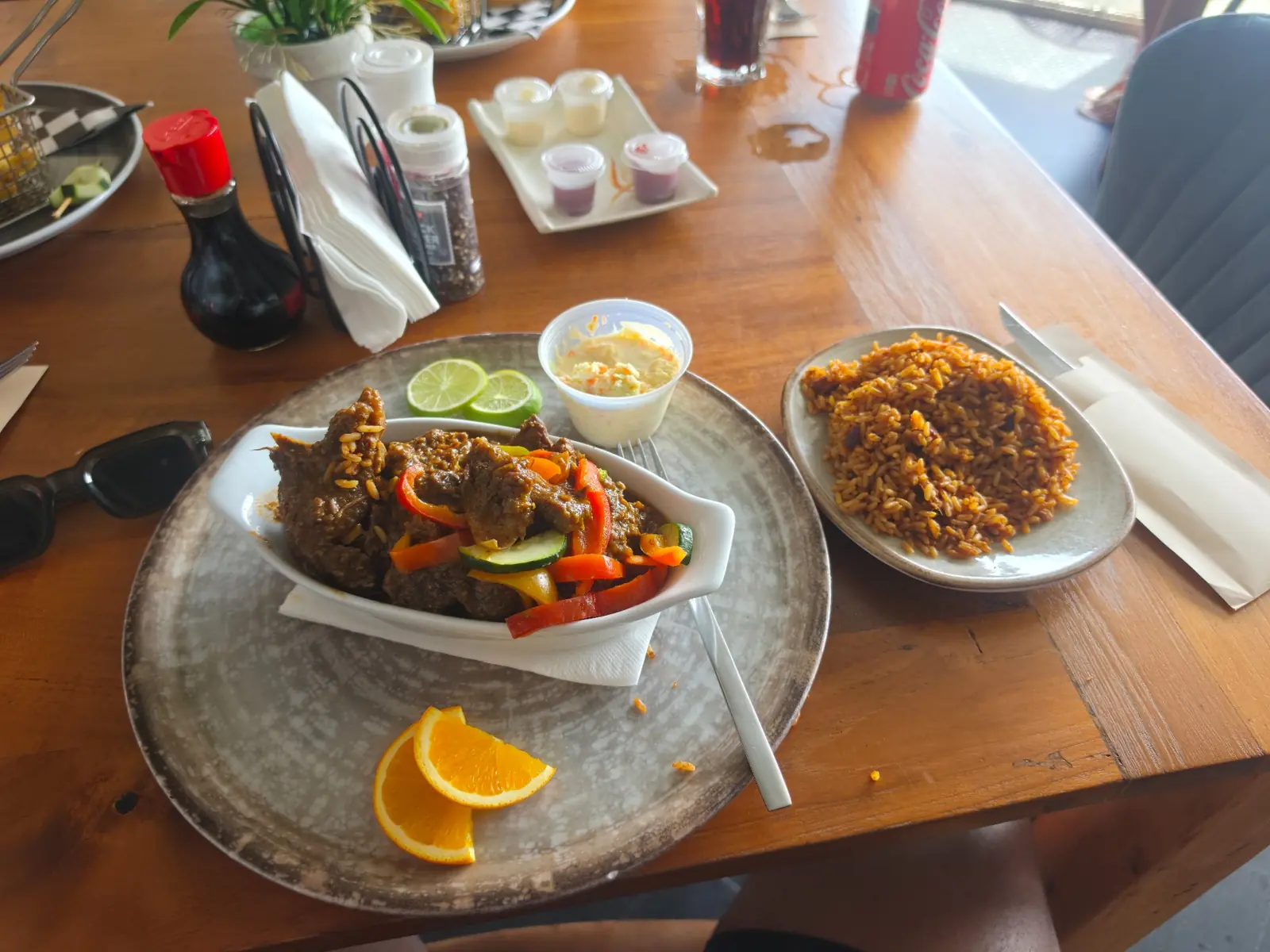
Thursday started with groceries, followed by lunch at Plasa Bieu, also called Marshe Bieu, in Willemstad. We ordered stobá di kabritu, a rich, slow-cooked goat stew. It's one of those meals that reminds you there's much more to the island than beautiful beaches and cocktails.
Food note: Plasa Bieu is the old market food court, known for traditional local dishes. Goat stew is a classic of Curaçao's Krioyo cooking tradition. Source: Curaçao Tourist Board Afterwards, we relaxed at Mambo Beach and visited some of my family. Having relatives on Curaçao changes the feeling of a visit. It's not just about going somewhere warm; there's a personal connection waiting for me here.
We hadn't planned much for the evening. Then we got talking to two guys from Suriname who were staying below us at the resort. One drink turned into another, and before we knew it, we were heading into Willemstad together for drinks at a rooftop bar. It was a more luxurious stop than we'd originally pictured, but the atmosphere was great.
From there, we tried Bar P, after hearing that Thursdays were supposed to be lively. Not this particular Thursday, apparently. We didn't stay long. Instead, we headed back towards Mambo Beach and ended up at Club Live 973.
Now, this was busy. It also took me a moment to get used to going out again. The amount of cigarette smoke inside was something else. The next morning, I was fairly sure I could still identify the brand the person next to me had been smoking.
Pigs on the beach, live music in a fort, and another late night.
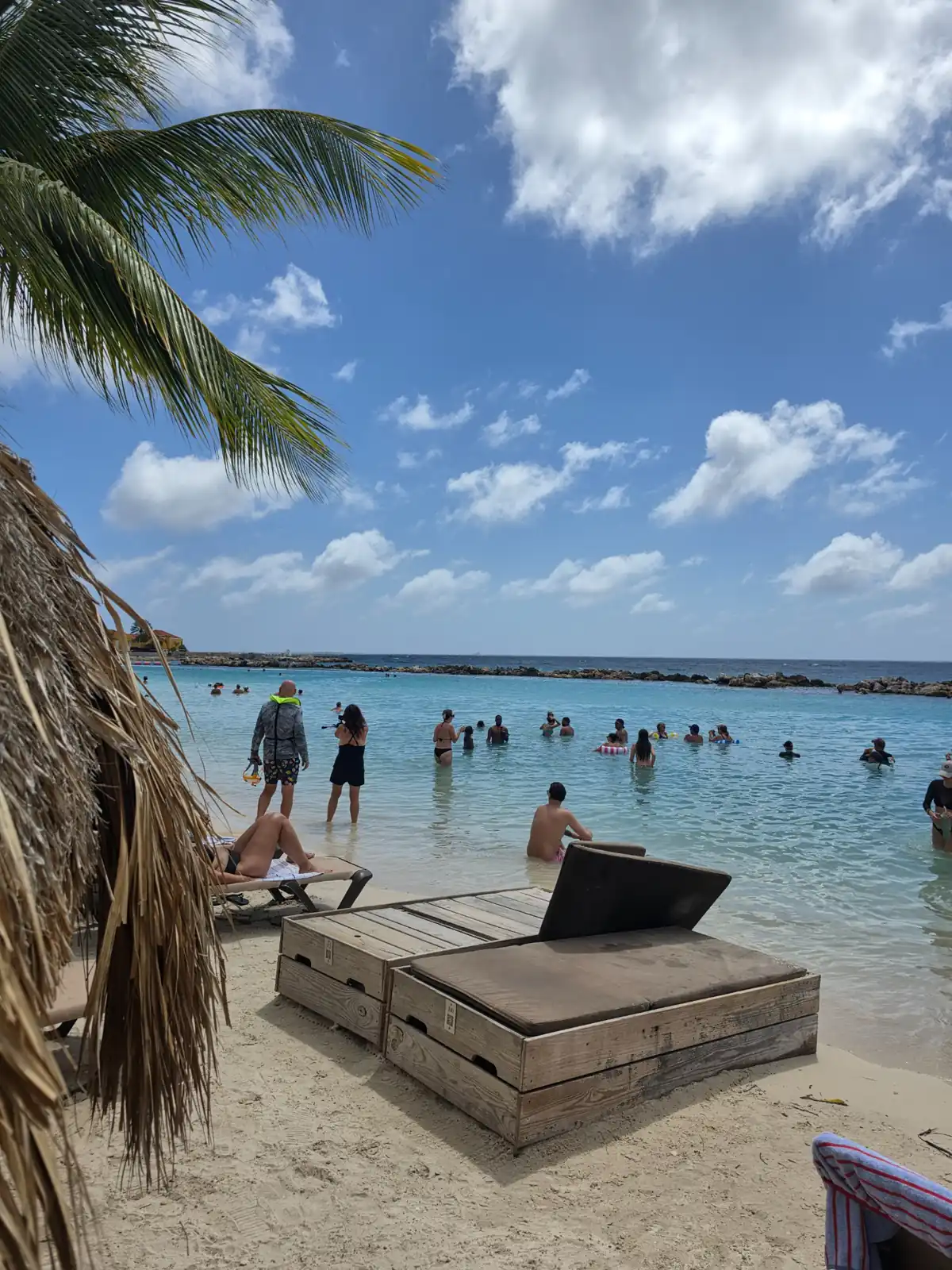
Friday took us west to Playa Porto Mari, a lovely stretch of coast with clear water, beach facilities and a slightly unexpected group of residents: pigs roaming around the area.
I counted roughly eight during our visit. They're not there to perform for tourists; they're animals sharing the space, and it's worth keeping your food and bags secure rather than trying to feed or approach them. The beach charges an entrance fee, which is something to budget for at several of Curaçao's managed beaches. Still, a few hours here with a cold beer were very well spent.
We also spotted some of the other animals that make island drives memorable: goats, iguanas and the occasional free-roaming dog. Not every interesting moment here requires an entrance ticket. In the late afternoon we returned to Bientu, freshened up, and went to Otrobanda. We stopped at Rif Fort for a drink and some live music. Lovely setting. Less lovely waiting roughly thirty minutes for our drinks.
A bit of history: Rif Fort dates back to the nineteenth century. Today, the old fort is part of a shopping and dining area, so the same walls that once served a defensive purpose now host restaurants and entertainment. Source: Curaçao Tourist Board
Later, we made our way to Madero Ocean Club at Mambo Beach. During the day it's a place for sunbeds, a swim and a drink; at night it can turn into an open-air party with DJs and music. Another very good evening—and another reminder that my beach-to-party schedule was working just fine.
An unexpected festival ticket and a slower Sunday.
Saturday started slowly, with drinks and conversations back at the resort. But we had something to look forward to that evening.
On our flight to Curaçao, my friend Cees had met someone involved in organising DTMF Halloween. Through that unexpected encounter, we ended up with complimentary festival tickets worth around €50 each. Sometimes the best travel opportunities start with talking to someone you've never met before.
First, though, there was happy hour at Jan Thiel Beach. Priorities, obviously. Then it was off to the festival. The 2026 Halloween edition took place on 31 October at Kite Beach in St. Joris Bay, with dance, house, electronic and urban music on the programme. We had a brilliant time. Festival listing
Sunday was a different story. I headed out for a few groceries and, more importantly, pastechi. If you've never had one, picture a savoury, golden pastry filled with cheese, chicken, beef or another filling. They're simple, delicious and dangerously easy to keep buying. Curaçao food guide
The rest of the day was spent back at the apartment. I had time to fly the drone where permitted, organise my footage and edit some videos. The constant breeze up at Bientu made it an especially pleasant place to do absolutely nothing for a while. Later, my aunt invited us over for dinner. Good food with family was exactly what I needed after a few energetic nights.
Painted streets and possibly my favourite fish dinner.
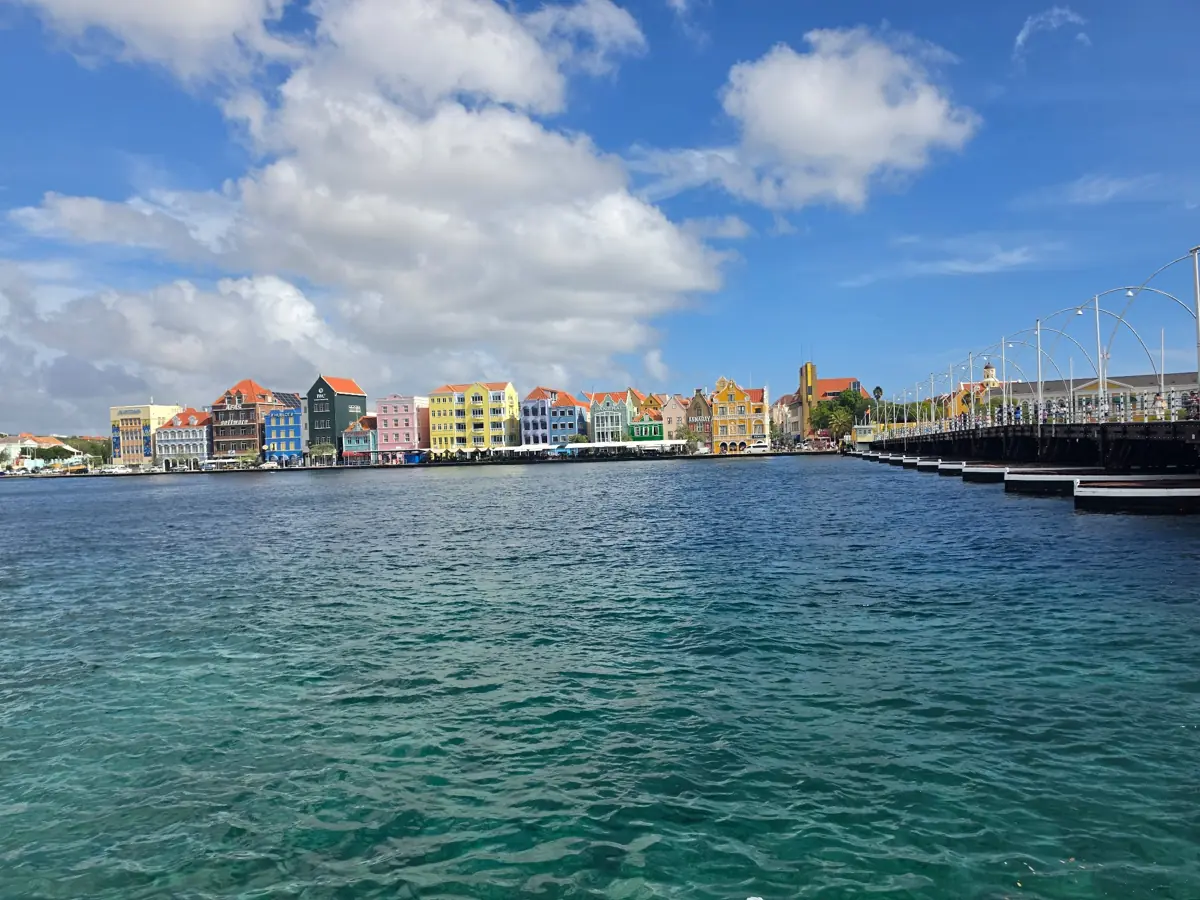
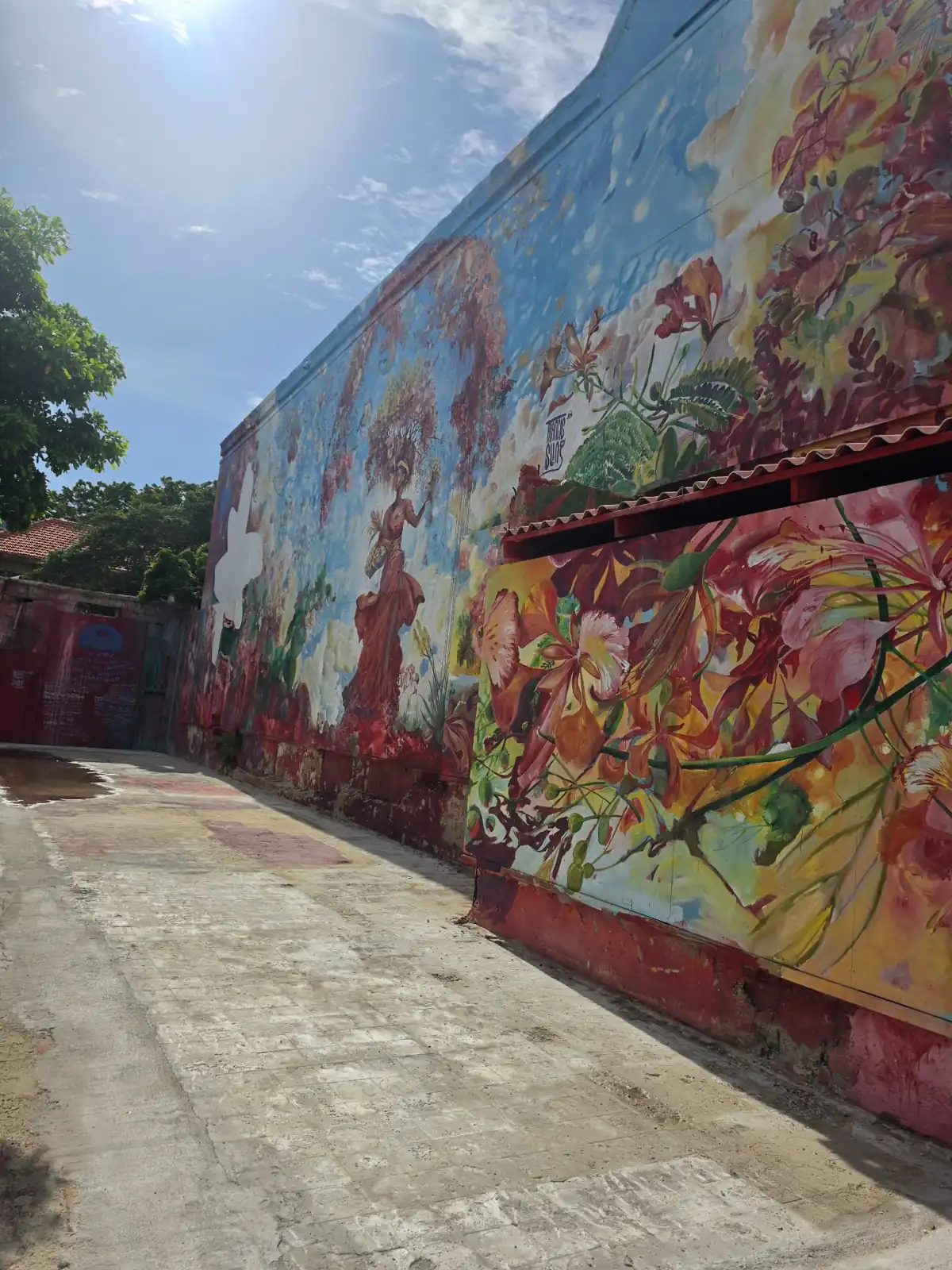
On Monday, we walked around central Willemstad, did some window-shopping and explored the murals in Otrobanda. The painted walls give the streets so much character; you'll spot little details and entire facades that make you stop for another photo. A little city fact: Historic Willemstad is a UNESCO World Heritage Site. The colourful waterfront gets much of the attention, but neighbourhoods such as Otrobanda have their own history, creativity and identity.
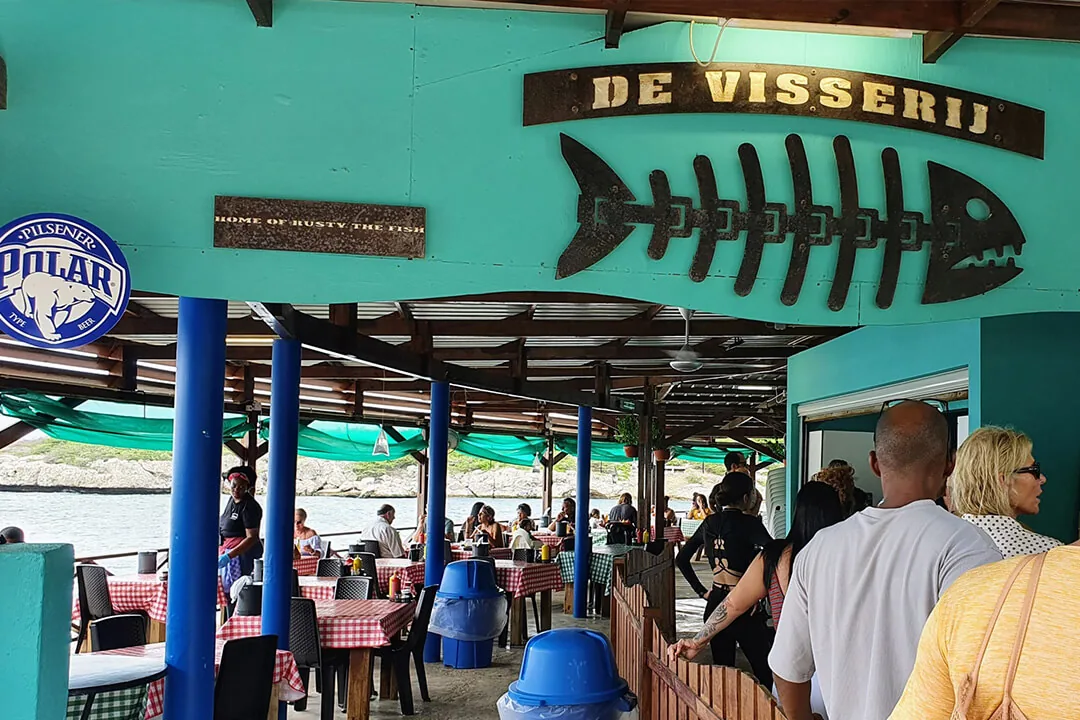
We moved on to Cabana Beach for a drink and some time by the water, then headed to De Visserij in Piscadera for dinner.
This was one of my favourite meals of the whole trip. The concept is wonderfully straightforward: choose your fresh fish, choose what you'd like with it, and have it prepared for you. No unnecessary fuss. Just really good food. One tip: arrive early. The place is popular, and queues can get long.
We kept the evening quiet. In our experience, Sunday and Monday were much slower for nightlife than the other days we'd been out—and I wasn't complaining.
One mountain. A lot of confidence. Even more sweat.
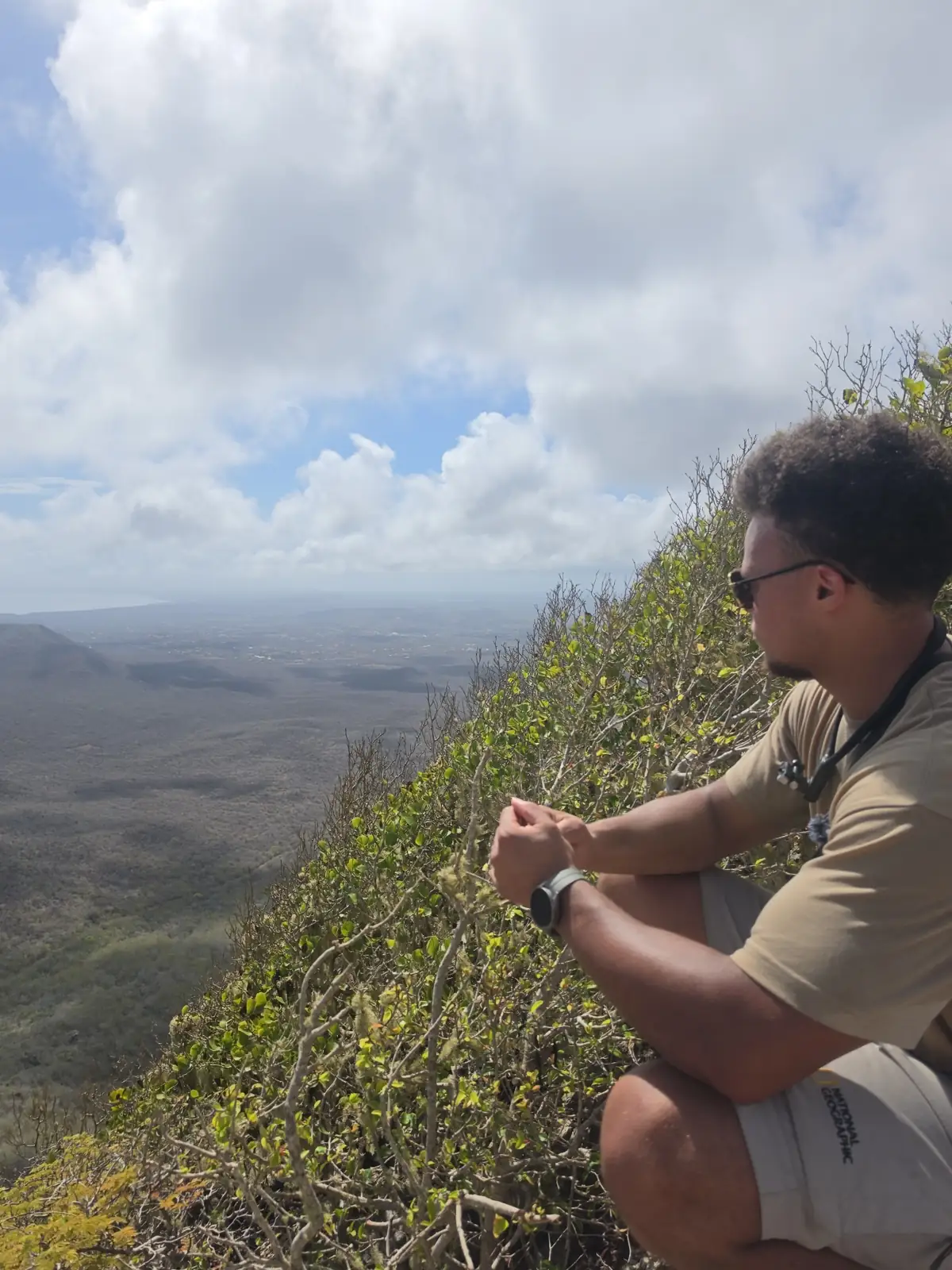
Tuesday's alarm went off at 7 a.m. I was heading out alone to climb Christoffel Mountain, the highest point on Curaçao. Before leaving, I had convinced myself this would be fairly easy. A quick hike, a nice view, back in time for lunch. No problem, right?
I drove towards the park, stopped for two bottles of water and something to eat, and started climbing. It took me about an hour to reach the top and thirty minutes to get back down. By the time I'd finished, I was completely—completely—soaked in sweat.
I'm saving the full story of that climb for a separate Field Note, because there is a little more to tell than just the time it took me.
Hiking fact: Christoffel Mountain rises 372 metres above sea level. The park currently requires climbers to start before 10 a.m., because of the heat. Check the official rules before your visit and bring more water than you think you'll need. Mountain information · Opening hours and safety
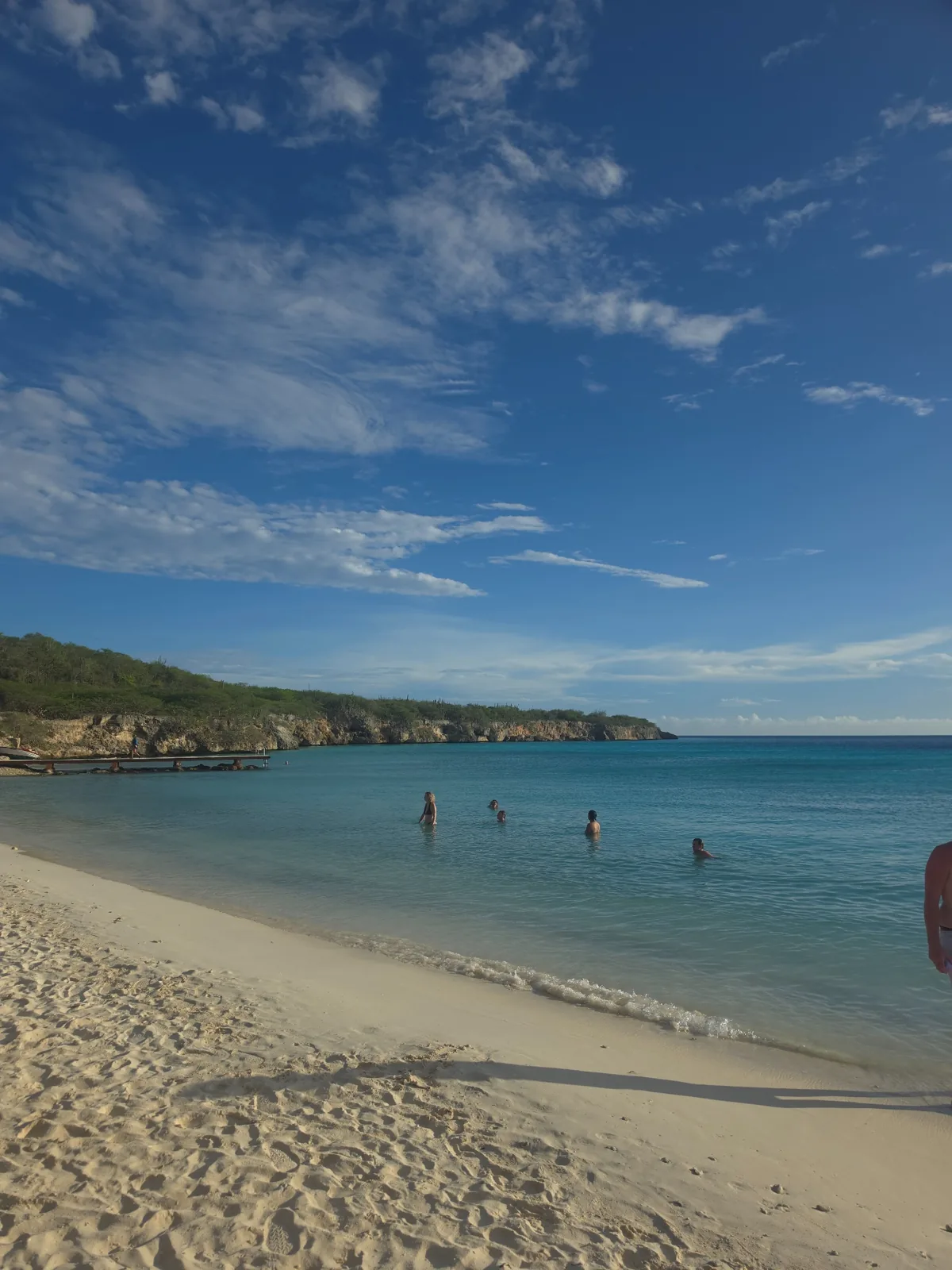
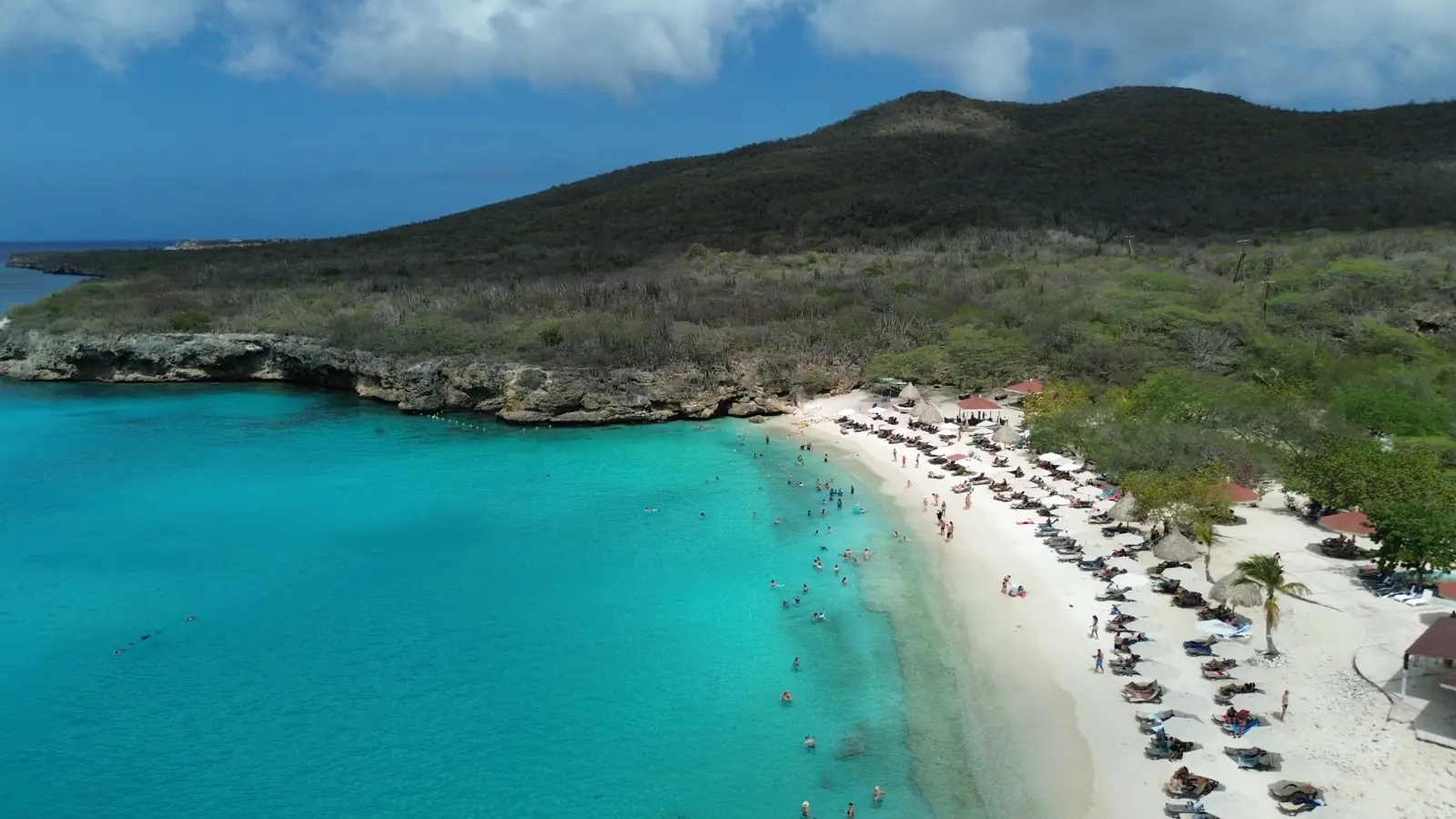
After the hike, I treated myself to a peaceful afternoon at Grote Knip, also known as Playa Kenepa Grandi. Honestly, this is one of the most beautiful beaches I've visited. The colour of the water looks almost unreal, but it really is that blue.
I also drove towards Shete Boka National Park, but decided not to go inside after looking at the admission price. Resident and visitor rates can be very different. Even with family on the island, I couldn't simply claim a resident rate. Family ties and proof of local residency aren't the same thing.
Practical price note: The park's published standard adult admission is US$15 / Cg 26.25, with a Cg 2 local rate available only with the required local ID or driver's licence. Check the official price list rather than relying on older online figures. Curaçao uses the Caribbean guilder (Cg/XCG), introduced in 2025. Shete Boka prices · Currency information
By about 4 p.m., I was back at the resort for drinks with the boys. That evening, we gave Bar P another try—and what a difference. This time it was packed, with a genuinely fun atmosphere. And, just like a proper Curaçao night should, ours ended with another truk'i pan stop in Saliña.
The final full day: cooler box, cards and a beach party.
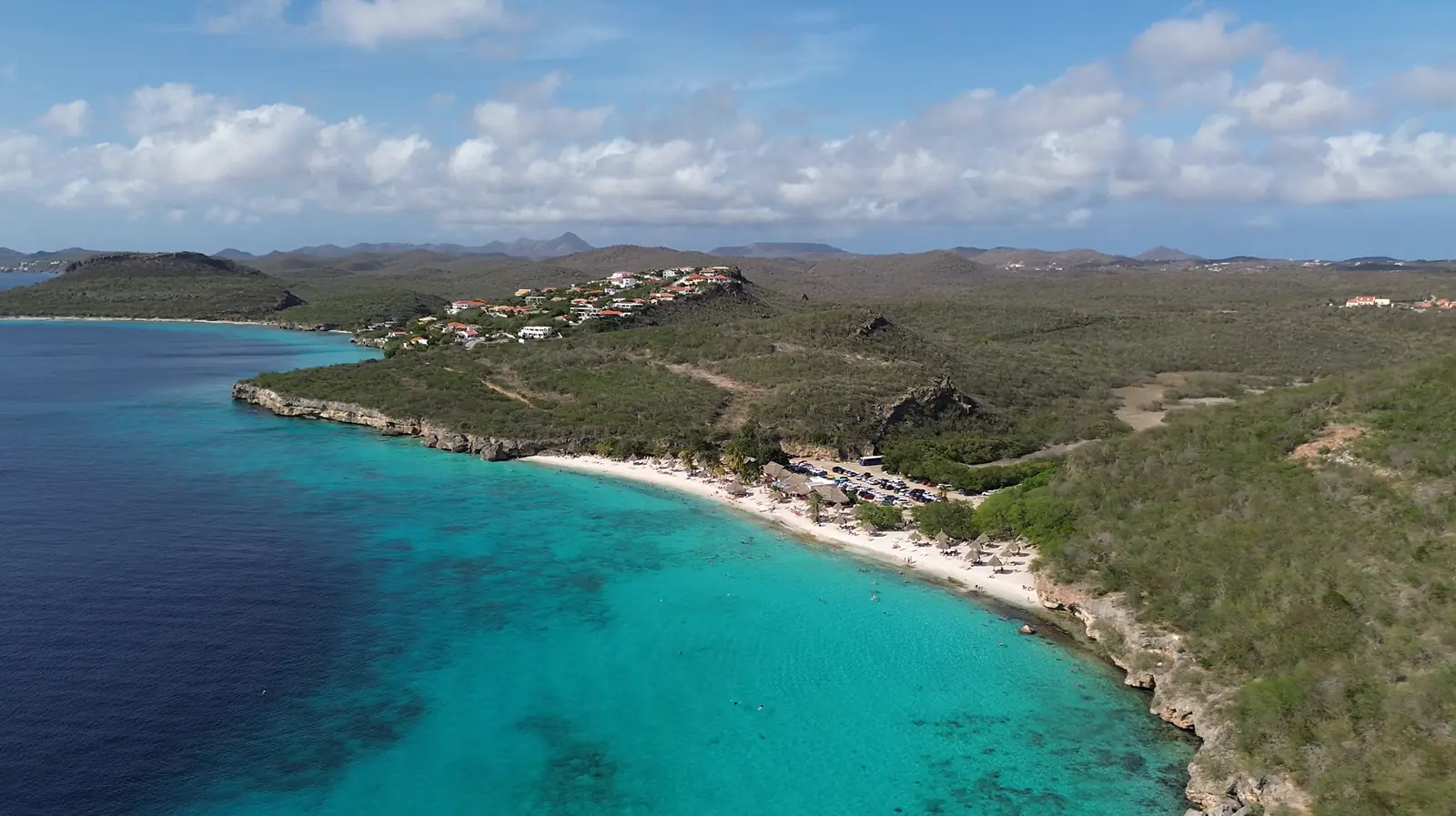
Wednesday was for Cas Abao Beach. We stopped for supplies, filled a cooler box with ice and drinks, and settled in for about four hours of swimming, relaxing and enjoying the sun. Beach fact: Cas Abao is on Curaçao's southwest coast and has facilities such as showers, a beach bar and a dive shop. It's especially well known for swimming and snorkelling. Source: Cas Abao Beach
Back at the apartment, we had drinks and played cards before heading to Mambo Beach once more for a house-music beach party. We had a great final night out. I should also introduce two recurring visitors at our apartment. One was a friendly wandering dog we named Freddy. The other was a pigeon that actually flew inside. Freddy was welcome. The pigeon apparently didn't think it needed an invitation either.
One more goodbye before the next chapter.
Thursday, 5 November, arrived far too quickly. We packed everything, cleaned the apartment, washed the rental car and made time to say goodbye to my great-aunt. Then we spent our final hours at The Green House at Mambo Beach, eating, having one last drink and stretching the goodbye a little longer.
After that, it was back to return the car, check in our luggage and move on to the next destination.
Eight nights here felt like two different trips in one. There were nights when we stayed out late, mornings when I hardly moved from my chair, and days when the view from a beach or a hill made me forget to check my phone. But the moments that mattered most were not always the spectacular ones. They were dinners with family, conversations with people we'd only just met, and the feeling of coming back to somewhere that has always been part of my story.
A final local tip: If you're on Curaçao and need a barber, have a look at The Location Barber on Instagram. What stayed with me: Curaçao gave this journey the start I hoped for: a bit of adventure, a lot of laughter, family time and enough quiet moments to appreciate all of it. Now, on to whatever comes next.
Want the next chapter from the road? Subscribe to Postcards from Dainyel for short stories, interesting local facts and updates as the journey unfolds.